Tell Me More: Jewish Joy and the Values We Share
This project is created as part of COJECO Arts Against Antisemitism Initiative and is made possible with PATH funding through the New York City Mayor's Office for the Prevention of Hate Crimes and the Jewish Community Relations Council of New York.
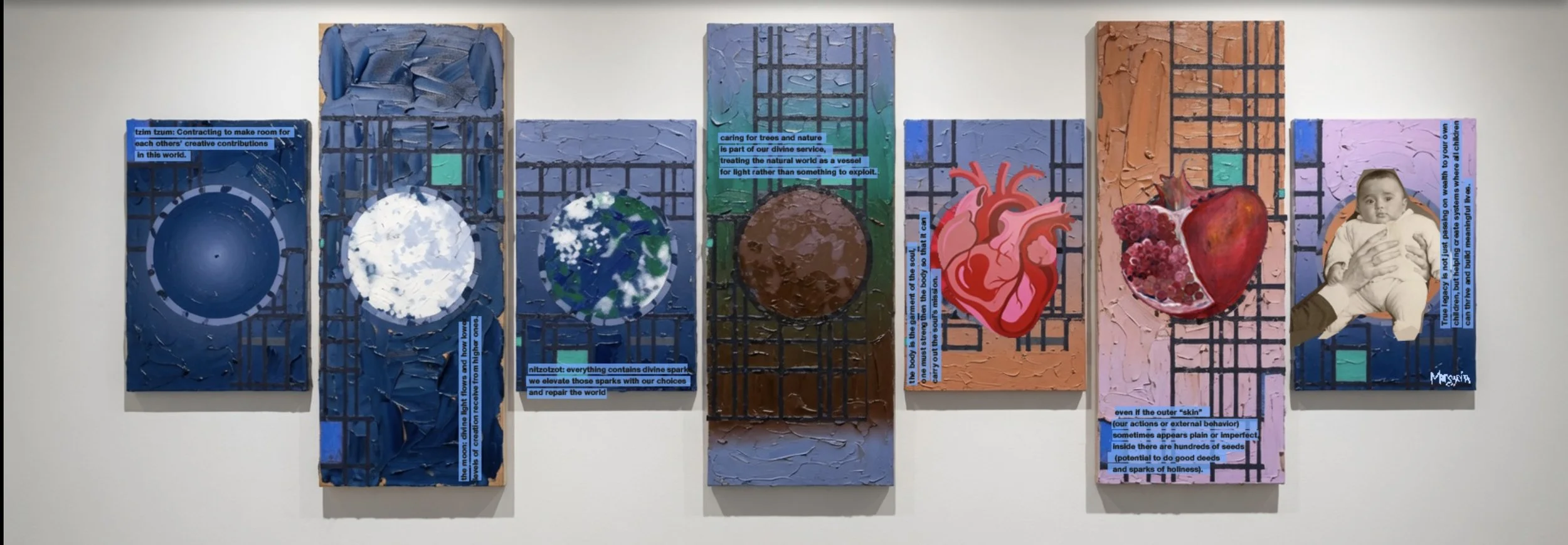
Seven paintings where Jewish wisdom meets the values in all our hearts.
My family named me Margarita to hide my Jewish identity in Ukraine under Soviet rule. This series is the opposite of hiding.
This series encapsulates some of the sparks of joy I've found in studying Jewish wisdom in New York City communities since 2023, and how naturally they meet the values so many of us already carry in our hearts.
Making room for each other.
Giving, and letting ourselves receive.
Lifting up the communities we touch.
Caring for the earth.
Caring for ourselves so we can show up for others.
Sharing the gifts only we can give.
Building a better world for tomorrow.
pledge to put your actions where your heart is
Panel by Panel
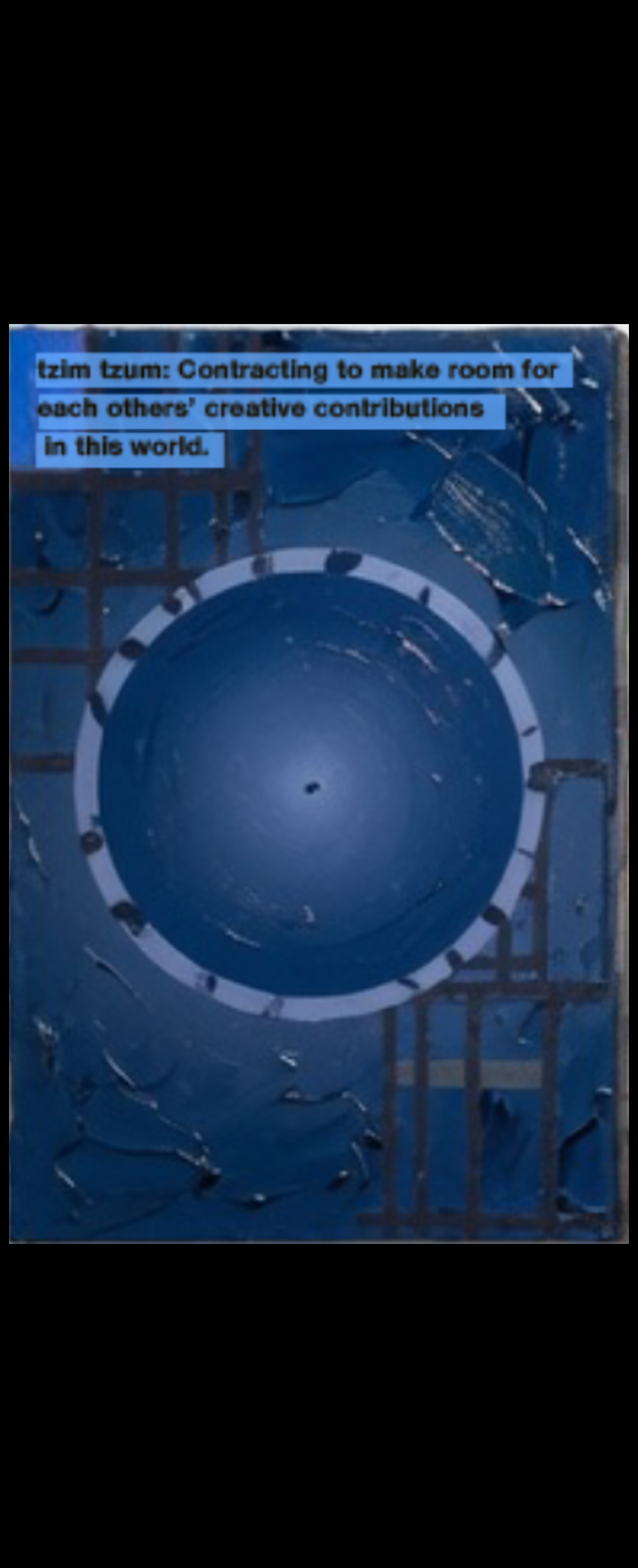
Panel 1 · Tzimtzum
What we have as far as skills, strengths, talents, athletic or aesthetic gifts, are naught without the context of what they can bring to the betterment of the world, especially those in your immediate world.
Parsha Vayakhel-Pekudei reflection, 2026
When did someone make room for you to shine?
The value we share: Mipnei Darchei Shalom, building relationships and making room for everyone's contributions.
Jewish history
The Maccabees refused an empire that demanded everyone believe and live the same way, and won back Jerusalem. Hanukkah, the festival of their rededicated Temple, celebrates the right to be different. The Talmud keeps the opinions that lost the argument right beside the ones that won.
New Yorker perspectives
"Before you can activate your mutual responsibility with others, you have to be in relationship with them first."
Not Your Babushka's Russian Speaking Jew (JDC Entwine), 2020
Jewish wisdom and mysticism
Tzimtzum means contraction. In the Kabbalah of the Arizal, explained in the Tanya (Shaar HaYichud VehaEmunah, chapters 4 to 7), the Infinite drew itself inward to make room for a world. We can do the same for each other's creative contributions.
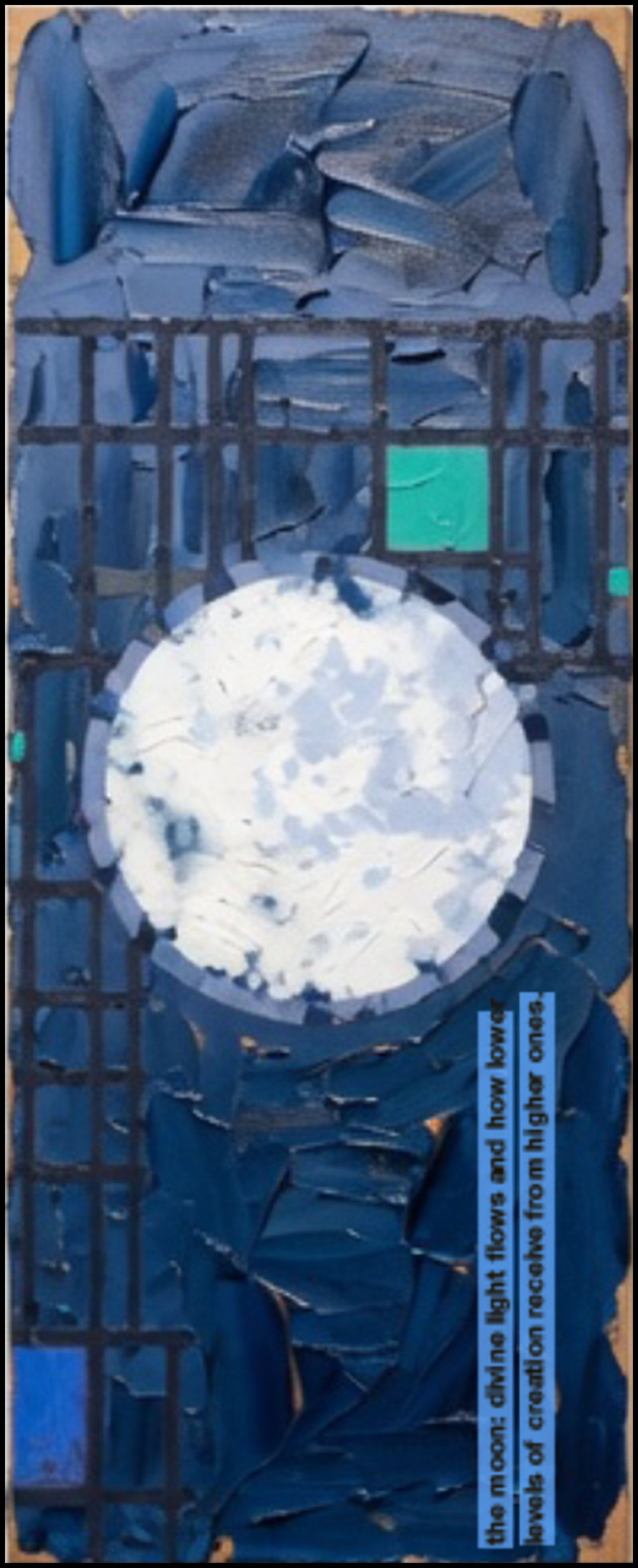
Panel 2 · The Moon
The moon has no light of its own. Everything it shines, it receives from the sun. Pop culture is already fascinated by it. We know it pulls the tides, and we link its rhythm to women's cycles. I was amazed to learn that the Jewish calendar follows it too. Passover and Sukkot begin under a full moon, and Rosh Hashanah begins with a new one. In Chassidus, G-d is the giver and we are the receivers, but in our own lives we keep trading places. Sometimes we're the sun, pouring out for others. Sometimes we're the moon, and the brave thing is to let ourselves be filled. Receiving with an open heart is as holy as giving, because one can't happen without the other. Families rebuilding after a disaster know that accepting help takes as much courage as giving it.
When have you been the sun for someone, and when have you let yourself be the moon and receive light from others?
The value we share: Tzedakah, from tzedek, justice, giving from what each new moment gives us.
Jewish history
Blessing the new moon was the first commandment given to the Israelites as they left slavery (Exodus 12:2). A people who owned their own time were free. In ancient Israel, signal fires were lit from mountaintop to mountaintop out of Jerusalem to announce each new moon. Soviet Jews kept that calendar alive in secret for generations.
New Yorker perspectives
"We require different access points for our own Jewish traditions after being separated from them due to systematic oppression over generations."
Not Your Babushka's Russian Speaking Jew (JDC Entwine), 2020
Jewish wisdom and mysticism
The Tanya teaches that creation didn't happen once and end. G-d's word keeps speaking the heavens, the sun and the moon into being every single moment, and if it paused for an instant, everything would return to nothing (Shaar HaYichud VehaEmunah, chapters 1 and 2). The Baal Shem Tov, who taught in Medzhybizh, Ukraine, read this into the verse "Forever, O G-d, Your word stands firm in the heavens" (Psalm 119:89).
From the Rebbe Just as G-d renews creation every moment, we can bring something new to every moment, as partners with G-d in creation.
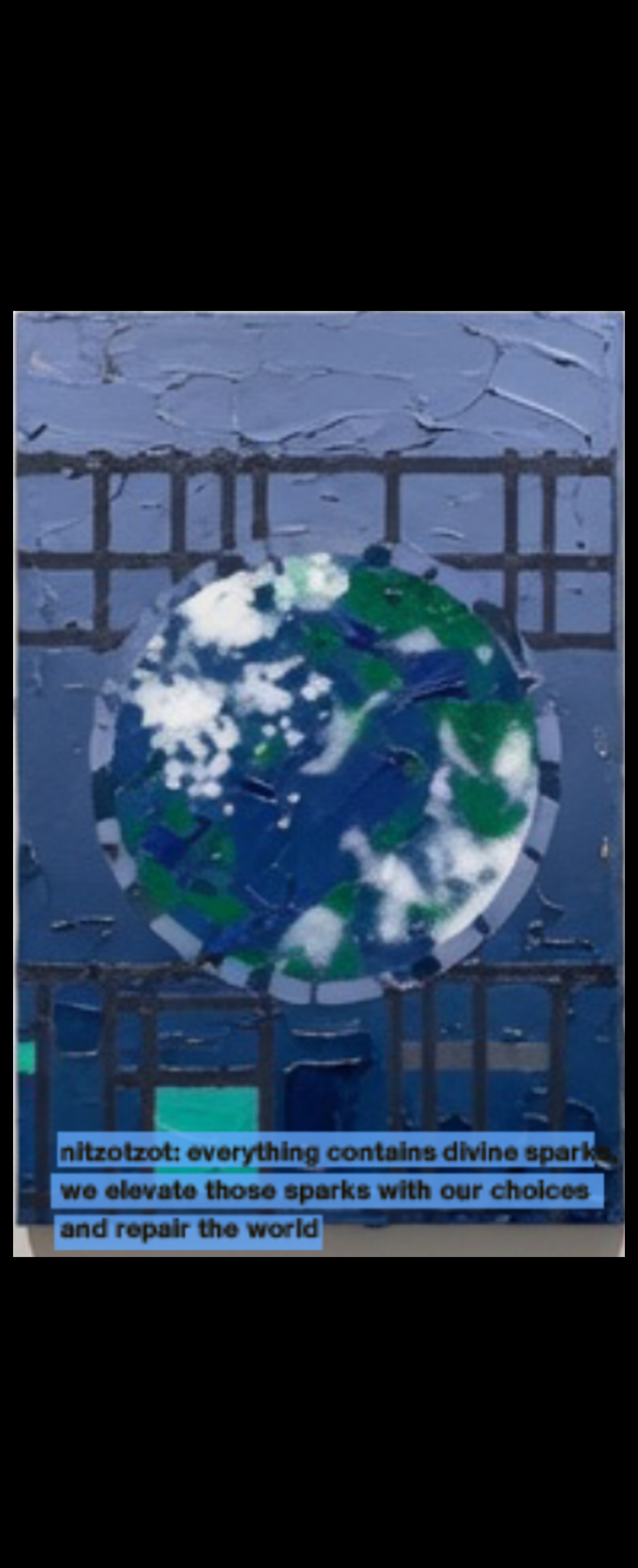
Panel 3 · Nitzotzot
Our purpose as humans is to elevate the everyday mundane, our bodies, our work, relationships, homes, habits, weekly flow, in the small portion of the world that is ours, which will have ripple effects globally. We elevate the mundane by remembering that within us is a Gdly spark.
Parsha Tzav reflection, 2026
How are you using your spark to help the communities you touch?
The value we share: Tikkun Olam, repairing the world.
Jewish history
The phrase tikkun olam first appears in the Mishnah, where the rabbis changed laws to protect the vulnerable "for the repair of the world." Fixing society through ordinary choices is a 2,000-year-old Jewish idea. The teaching of the sparks itself took shape with the Arizal in Tzfat, in the hills of the Galilee.
New Yorker perspectives
"...the potent combination of setting intentions plus values plus action."
Not Your Babushka's Russian Speaking Jew (JDC Entwine), 2020
Jewish wisdom and mysticism
Everything contains divine sparks. In the Tanya (chapter 37), our everyday choices lift those sparks up, and in chapter 36, the purpose of the world is that darkness itself is transformed into light.
From the Rebbe Each of us is given a section of the world to refine and make new. Quoting the Baal Shem Tov of Medzhybizh, he taught that wherever you find yourself, you were sent there for a reason.
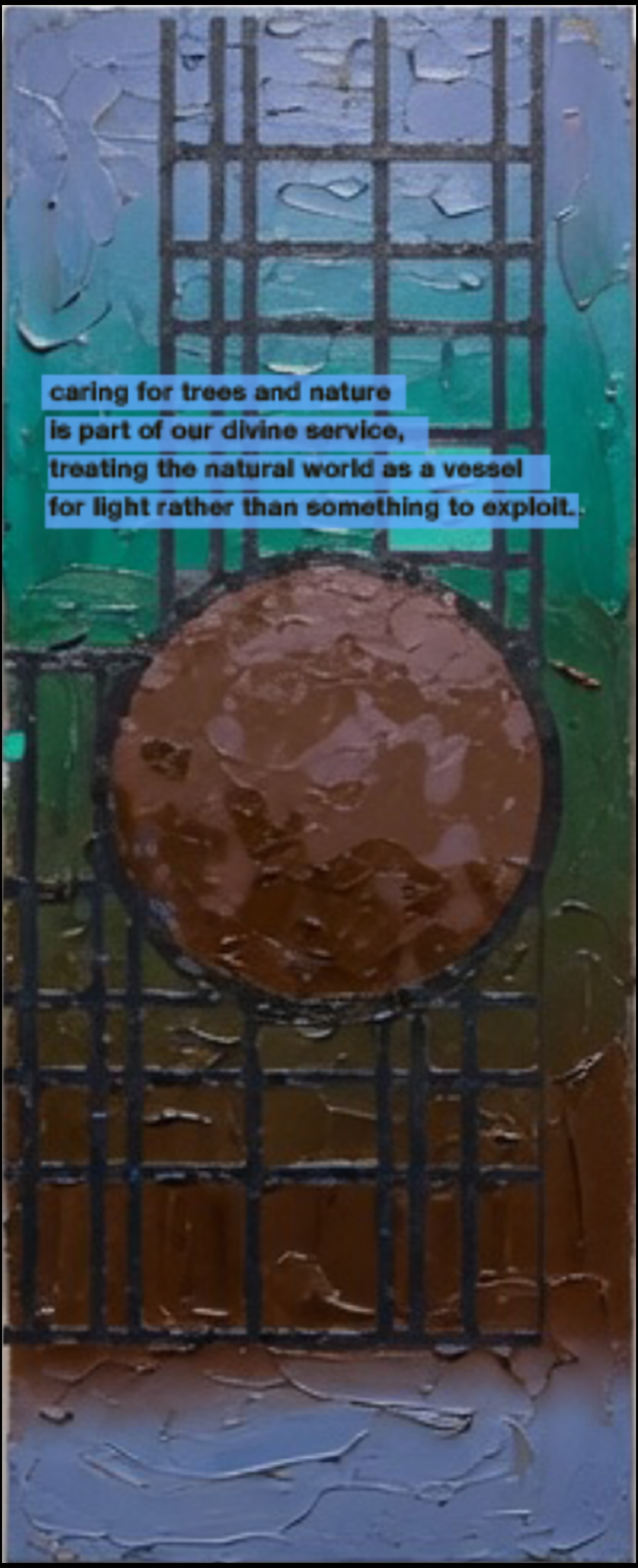
Panel 4 · Trees and Nature
I was born the week of Chernobyl, one of the worst environmental disasters in history, to Jews waiting to emigrate as refugees from the Soviet wasteland. The same regime that poisoned the land also tried to erase our faith. So when the Torah asks us to treat the natural world as a vessel for light rather than something to exploit, I hear the opposite of where I came from.
Adapted from Parsha Terumah reflection, 2026
How are you caring for the land that shaped you?
The value we share: Lo Ta'Amod, don't stand idly by, including when the planet and our neighbors are in danger.
Jewish history
God placed the first human in Eden "to work it and to guard it" (Genesis 2:15), and the Torah forbids destroying fruit trees, even in war (Deuteronomy 20:19). The shmita law let the land rest every seventh year (Leviticus 25), one of the oldest environmental laws on record. Tu B'Shvat, the New Year for Trees, is timed to the rains of the Land of Israel.
New Yorker perspectives
Every Lag BaOmer, our South Bronx Jewish community gathers around a bonfire under the open sky. The holiday honors Rabbi Shimon bar Yochai, the sage tied to the Zohar, the central book of Kabbalah, so we spend the night by the fire with music, food, and each other. It turns out some of the most granola traditions out there have been in our heritage all along.
In April 1981, in the middle of an energy crisis, the Lubavitcher Rebbe spoke from his synagogue in Crown Heights, Brooklyn, in a talk broadcast live, and urged America to invest in solar power, decades before climate change was a household concern. The country had sunlight "in very great abundance," he said. "What is missing in this situation is the contribution of humanity."
Jewish wisdom and mysticism
A midrash tells of God showing Adam the trees of Eden and saying, take care not to ruin My world (Kohelet Rabbah 7:13). The Tanya teaches that even the earth and stones hold a Divine life-force (Shaar HaYichud VehaEmunah, chapter 1).
From the Rebbe "Man is a tree of the field." For Tu B'Shvat, the Rebbe taught that trees keep growing from strength to strength, and so can we.
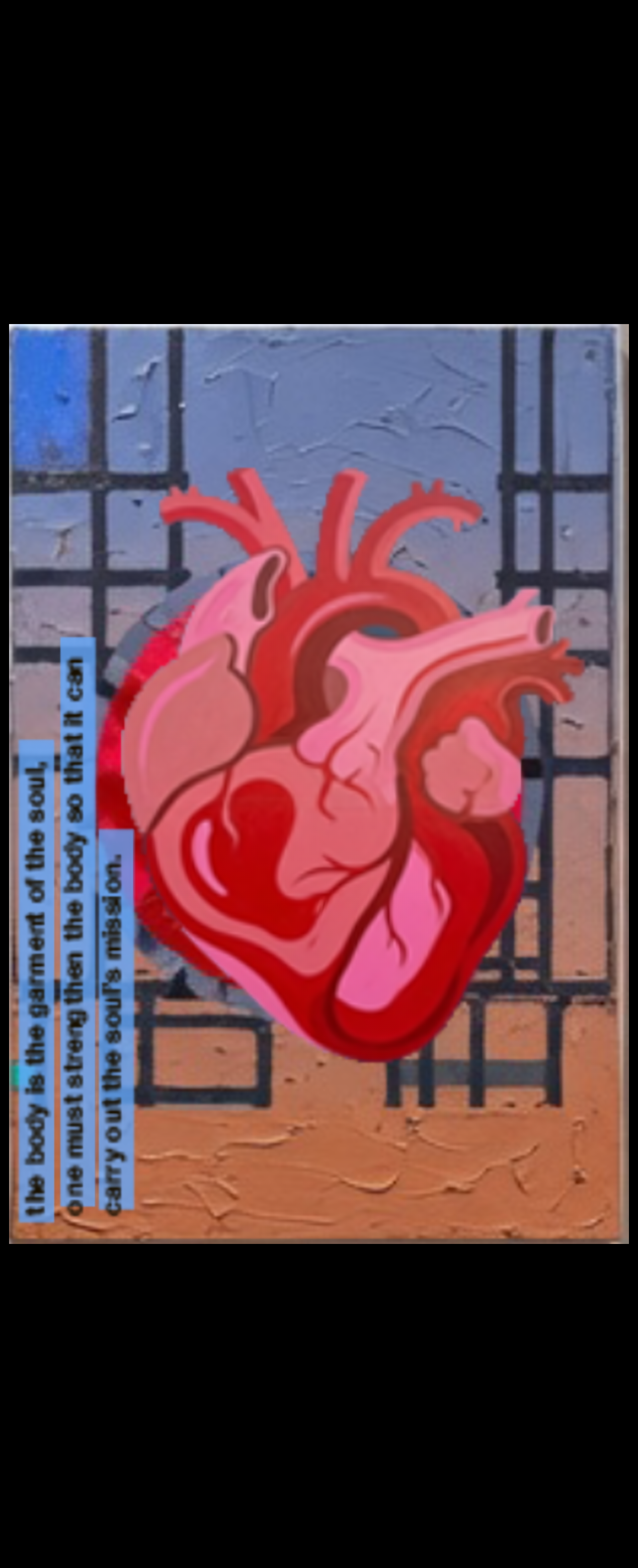
Panel 5 · The Heart
Studying the Tanya, we visualized the relationship between the divine soul and the animal soul inside each of us. Both are important. A candle's flame can only reach high, toward the divine, while it's attached to a healthy wick, the body. Caring for my body isn't separate from my spiritual life. It's what keeps the flame burning.
Adapted from Parsha Tzav reflection, 2026
How do you care for yourself so you can show up for others?
The value we share: Rachamim, compassion, starting with how we care for ourselves so we can care for others.
Jewish history
Maimonides was also a working physician whose advice on diet, exercise and sleep reads like modern wellness, and he taught that keeping the body healthy is part of serving God (Hilchot De'ot 4:1). And Shabbat gave the world the idea of a weekly day of rest.
New Yorker perspectives
"Hani held me in a firm embrace and told me everything would be okay. It didn't solve much, but it provided a much needed sense of humanity and support."
"A Support System for Israeli Soldiers, and for Us", Tablet, 2012
Jewish wisdom and mysticism
"The soul of man is a candle of G-d" (Proverbs 20:27). In the Tanya (chapters 19 and 35), the soul is a flame that always reaches upward, and it needs a healthy wick, the body, and the oil of good deeds to keep burning.
Rebbe Nachman of Breslov, born in Medzhybizh and buried in Uman, Ukraine, taught, "The whole world is a very narrow bridge, and the main thing is not to be afraid at all" (Likutei Moharan II:48).
From the Rebbe In his letters, the Rebbe urged people to strengthen body and soul together, and often quoted his predecessor on how precious the body is.
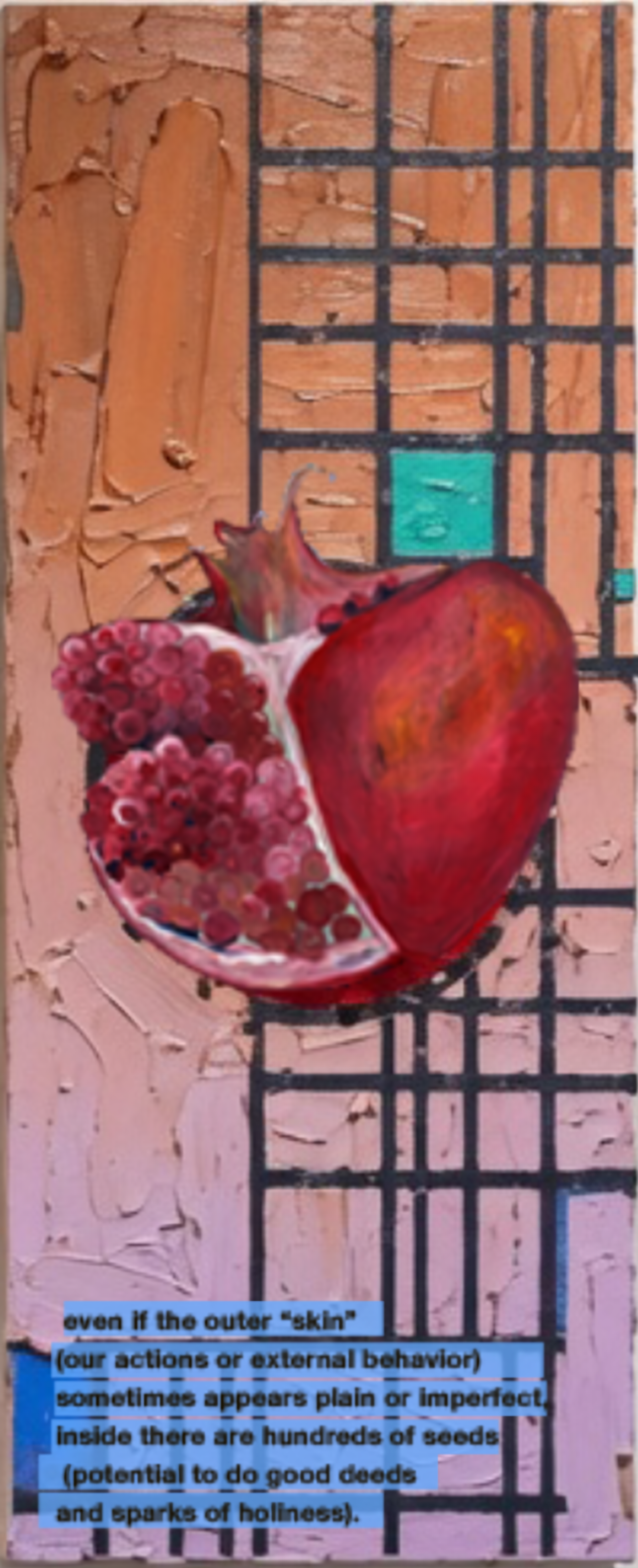
Panel 6 · The Pomegranate
It's said that a pomegranate holds 613 seeds, one for every mitzvah, every good deed we could be doing. Cut one open and it even looks like a heart. When I painted a pomegranate on my Imported Produce mural in East Harlem, I was painting the soul as I see it, a little rough on the outside, and packed with good waiting to come out.
What are you uniquely here to give that the world needs?
The value we share: Gemilut Chasadim, acts of loving kindness, the good deeds waiting inside every person.
Jewish history
During the Jewish revolt against Rome, rebels minted their own silver coins stamped with pomegranates and the words "Jerusalem the Holy." The pomegranate is one of the seven species of the Land of Israel (Deuteronomy 8:8). Pomegranates lined the hem of the High Priest's robe, and on Rosh Hashanah Jews still wish that their good deeds be as many as its seeds.
New Yorker perspectives
"I did as the MCs did, acknowledging the suffering from my past that nobody else wanted to talk about while empowering myself to progress beyond it."
"Graduation", Tablet, 2011
Jewish wisdom and mysticism
The Talmud says even people who seem empty are as full of good deeds as a pomegranate is of seeds (Berachot 57a). The Tanya teaches that our souls share one root, and "only the bodies are separated" (chapter 32). Rabbi Levi Yitzchak of Berditchev, Ukraine, was known as the defender of his people for always finding the good in every person.
From the Rebbe When someone quoted the Talmud's pomegranate line, the Rebbe turned it around. If they're full, why does anyone call them empty?
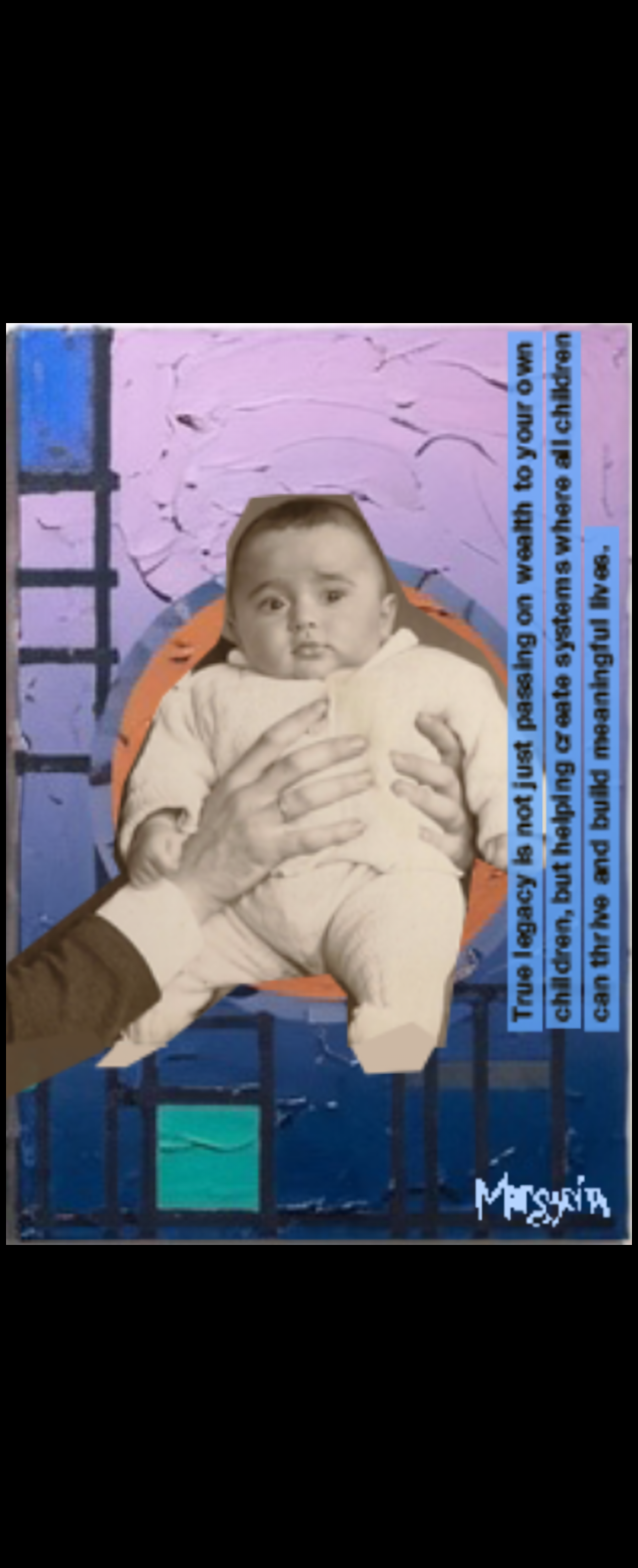
Panel 7 · Legacy
When I interviewed Ed Mermelstein, a Ukrainian-born real estate attorney who later served as New York City's Commissioner for International Affairs, and Yana Tolmacheva, who led Russian-speaking Jewish programming at Moishe House, we talked about how young people can use giving to lift up vulnerable people, here and around the world. True legacy isn't only what we pass down to our own children. It's how we rally around our community's most vulnerable.
Adapted from Not Your Babushka's Russian Speaking Jew, episode 6, 2020
What are you building today that will help repair the world for tomorrow?
The value we share: Ahavat HaGer, love the stranger, caring for the most vulnerable in our community.
Jewish history
Around the first century, Joshua ben Gamla, High Priest in Jerusalem, set up schools in every town in the Land of Israel so every child could learn, not only those whose fathers could teach them (Bava Batra 21a). It's one of the earliest public education systems.
New Yorker perspectives
"At that moment, the mourner does not need God per se; he needs a supportive community to rally around him."
"Two Deaths, One Answer", Tablet, 2012
"I was lucky enough that somebody brought me in. In fact, there were more than a few people that brought me in."
Ed Mermelstein, Not Your Babushka's Russian Speaking Jew (JDC Entwine), 2020
"Fast forward almost 40 years later to be able to experience that by going back and seeing what would have been if we wound up staying there... knowing that you can now help somebody that wasn't as lucky."
Ed Mermelstein, on visiting elderly Jews in Ukraine and Russia cared for by JDC, Not Your Babushka's Russian Speaking Jew (JDC Entwine), 2020
"It's not about the monetary gift. It's about the fact that there are different ways to contribute to being a part of something."
Yana Tolmacheva, Not Your Babushka's Russian Speaking Jew (JDC Entwine), 2020
Jewish wisdom and mysticism
In the Talmud, Honi meets a man planting a carob tree he will never eat from. "As my ancestors planted for me, I plant for my children" (Taanit 23a). The Tanya teaches that G-d desired a home in this world, built here, by us (chapter 36).
From the Rebbe The Rebbe was born in Mykolaiv, Ukraine, and grew up in Dnipro, where his father was chief rabbi until the Soviets exiled him to Kazakhstan for teaching Judaism. He later told Congress we can't rest while even one child lacks an adequate education. Since 1978, every U.S. president has marked his birthday as Education and Sharing Day.
For educators
Tell Me More was inspired by author Dara Horn and the Tell Institute, whose curriculum teaches Judaism as a living civilization. Each panel's question and sources can open a conversation with high school, college and adult learners. Classes are welcome to share their responses through the pledge at the top of this page.
About the artist
Margarita Korol is a Bronx-based multimedia artist and social impact designer whose family emigrated from Kharkiv, Ukraine. She holds an MFA in Design for Social Innovation from the School of Visual Arts and serves as Communications Director at NECHAMA, Jewish Response to Disaster. See more of her work at urbanpopartist.com. Grateful for the Chabad communities of the South Bronx Upper West Side, and and the Brooklyn and Chicago Friends of Refugees of Eastern Europe synagogues. Special thank you to the Alevsky/ Mishulovin/ Sapo families.
Support NECHAMA
This series makes its debut at Rockers in Relief, NECHAMA's annual benefit concert for disaster recovery, on November 12, 2026. NECHAMA brings Jewish values to communities rebuilding after disaster.
This project is created as part of COJECO Arts Against Antisemitism Initiative and is made possible with PATH funding through the Mayor's Office for the Prevention of Hate Crimes and the Jewish Community Relations Council of New York.