News! New Art Project Launching June 2026
This summer, Artist Margarita Korol is launching the forthcoming “Tell Me More” art installation, as part of COJECO Arts Against Antisemitism Initiative, and is made possible with PATH funding through the Mayor’s Office for the Prevention of Hate Crimes and the Jewish Community Relations Council of New York.
Stay tuned for more details.
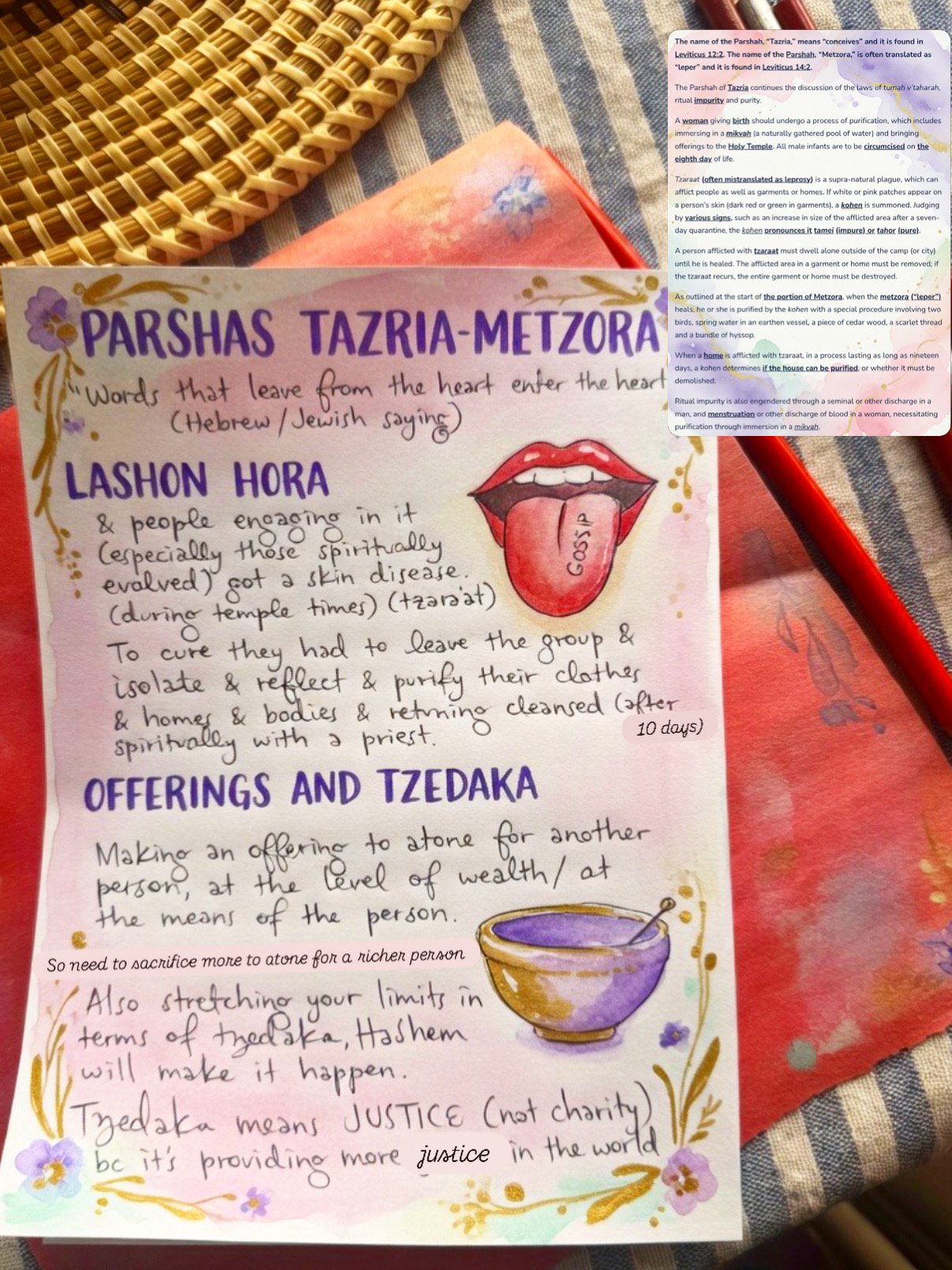
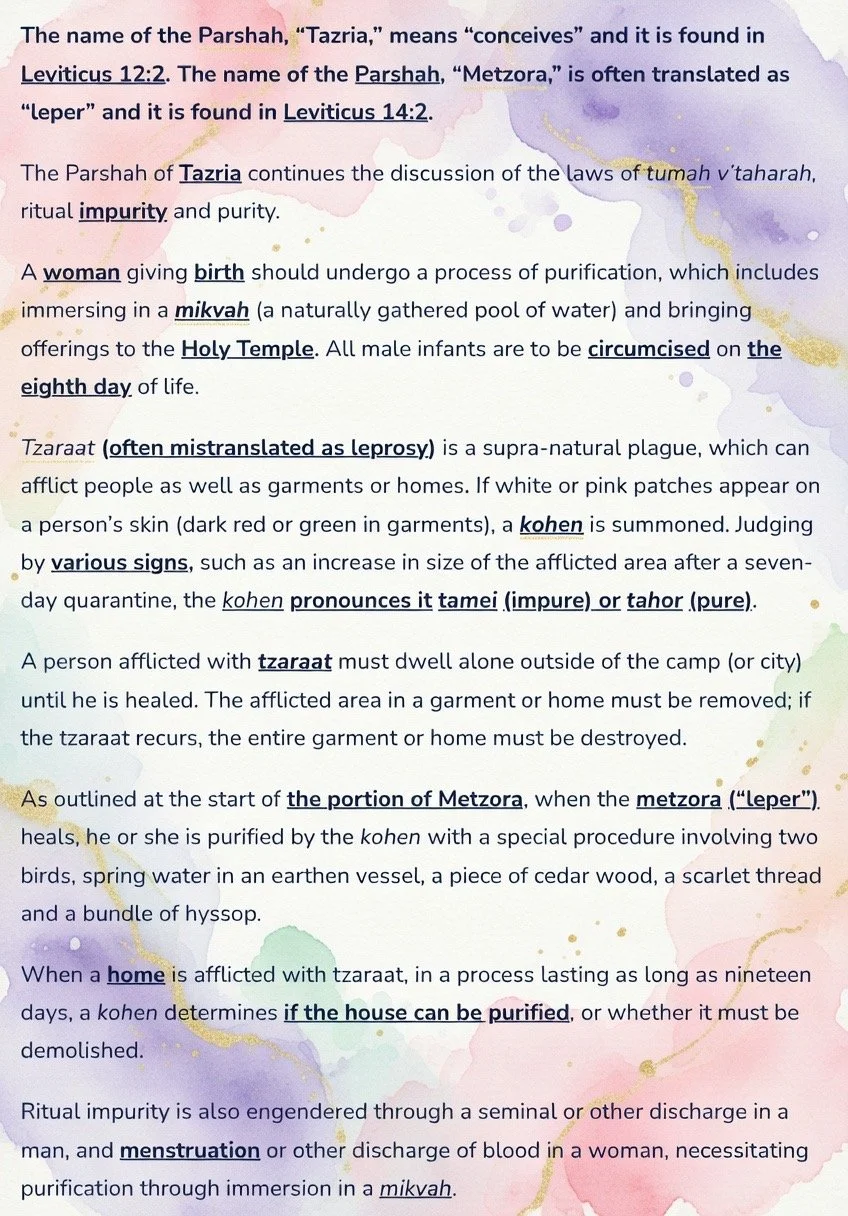
This week’s Torah Portion visual reflection
This week’s Torah portion reflection featuring insights on gossip, making offerings (on your and others’ behalves), and giving aid to those in need.
We’re Raising Dough
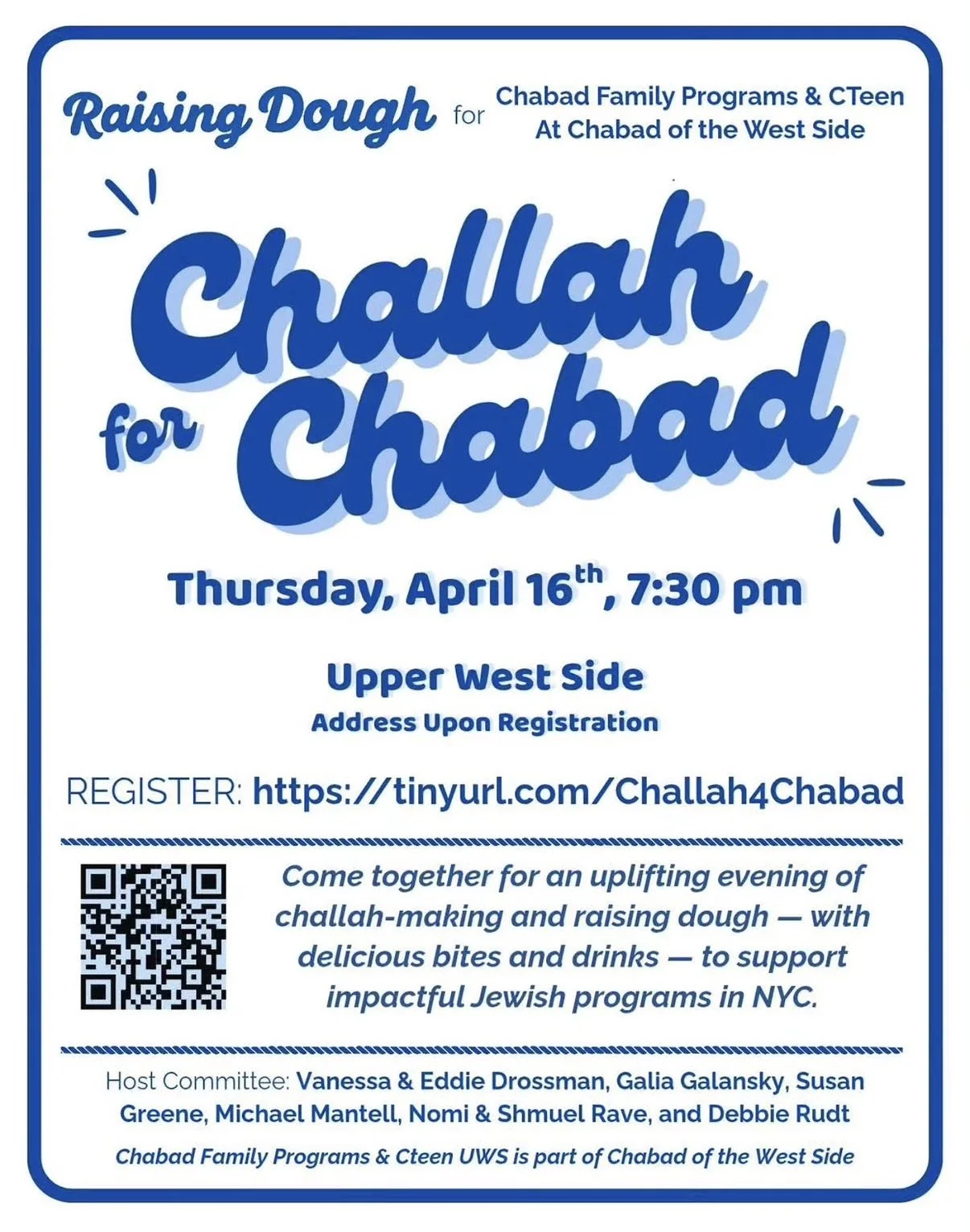
This low key challah gala is a fundraiser for my long-distance rebbetsin Chana’s sister Shayna’s programs on the Upper West Side engaging families with young children, and also to support the amazing community Seders and holiday dinners they host in their home that I’ve enjoyed the past couple years.
Register or donate at https://tinyurl.com/Challah4Chabad 🩵
Use code MARGARITA for 50% off tickets :)
A warm community to celebrate with
Since the Chabad family that had been engaging our South Bronx community relocated to community-build near Cleveland last year, it’s been tough to orient and re-establish a feeling of belonging in a physical Jewish community. While I continue to study Torah and Tanya with my long-distance rebbetzin Chana and the wonderful communal learning practice we’ve cultivated digitally over Zoom, her sister Shayna on the Upper West Side has made sure I had a warm community to celebrate with physically on holidays for community dinners.
In Rabbi and Shayna Sapo and their children’s home on holidays for community dinners, I’ve experienced unexpected moments of joy and laughter, learning and belonging. These Passover and Rosh Hashanah celebrations always collect a very special mix of people somehow, coming from all over: I’ve Sedered with Jews from South Africa, Iraq, Iran, Israel, and even Jersey and Long Island.
Understanding & Belonging
Some of the families I’ve met at these dinners have young members of their family serving in the IDF, and it’s been an honor to meet their siblings and parents and toast in their honor.
Personally I’ve also felt belonging in my own way. As a Jewkrainian, I have a need for access points to my own Jewish heritage to catch up after generations of Soviet/ Bolshevik religious oppression. This is an added area where Chabad and specifically this family have strengthened my Jewish practice and bond with Hashem. Because of Chabad’s mission to create opportunities for local Jews to reconnect with Jewish rituals throughout the yearly cycle, they anticipate and design around these needs to understand from the foundation up.
Coming from Ukraine with this inherited disconnection from my heritage, I’ve often felt not enough in American Jewish spaces, and like an outsider. However, in Shayna (and Chana’s!) homes, I felt the opposite. With the rebbe and his predecessors sharing Ukrainian roots, along with annual celebrations of liberations from the Soviet prisons that held captive my own family members, I finally felt seen and centered rather than othered in a Jewish space. Even the Sapo and Mishulovin’s oldest boys (both named Mendel) resonated with my story, with knowledge of subjects like Cossacks, refuseniks, and even a working knowledge of Yiddish! I cannot encapsulate in words the profound feeling of belonging that comes from discussing with an eight year old the story of my great grandmother’s acting in a traveling Yiddish theater troupe, and their escape from the Nazis to Kazakhstan.
Ukrainian Shmura Matzah
At last year’s Seder, Rabbi Sapo gifted me and another Jewkrainian with a box of matzah from Ukraine, which he received from Chabad delegates visiting from Ukraine—another gesture that made me verklempt (although that may be due to the four glasses of wine). That Passover week, I carried the box with me, offering my friends and colleagues a taste of the satisfyingly crispy and burnt-edged Ukrainian wheat shaped into round shmura matzahs, happy for the chance to serve as an ambassador of my Jewkrainian heritage.
A low-key Challah Gala
Anyway, this is all to say the Sapo family and their community building work are a gem in the uptown Jewish community. While there are other Jewish circles in the area, this is the one that truly makes me feel *at home.*
I hope you can join us April 16th on the Upper West Side! Register or donate at https://tinyurl.com/Challah4Chabad 🩵 (And you can use code MARGARITA for 50% off tickets.)
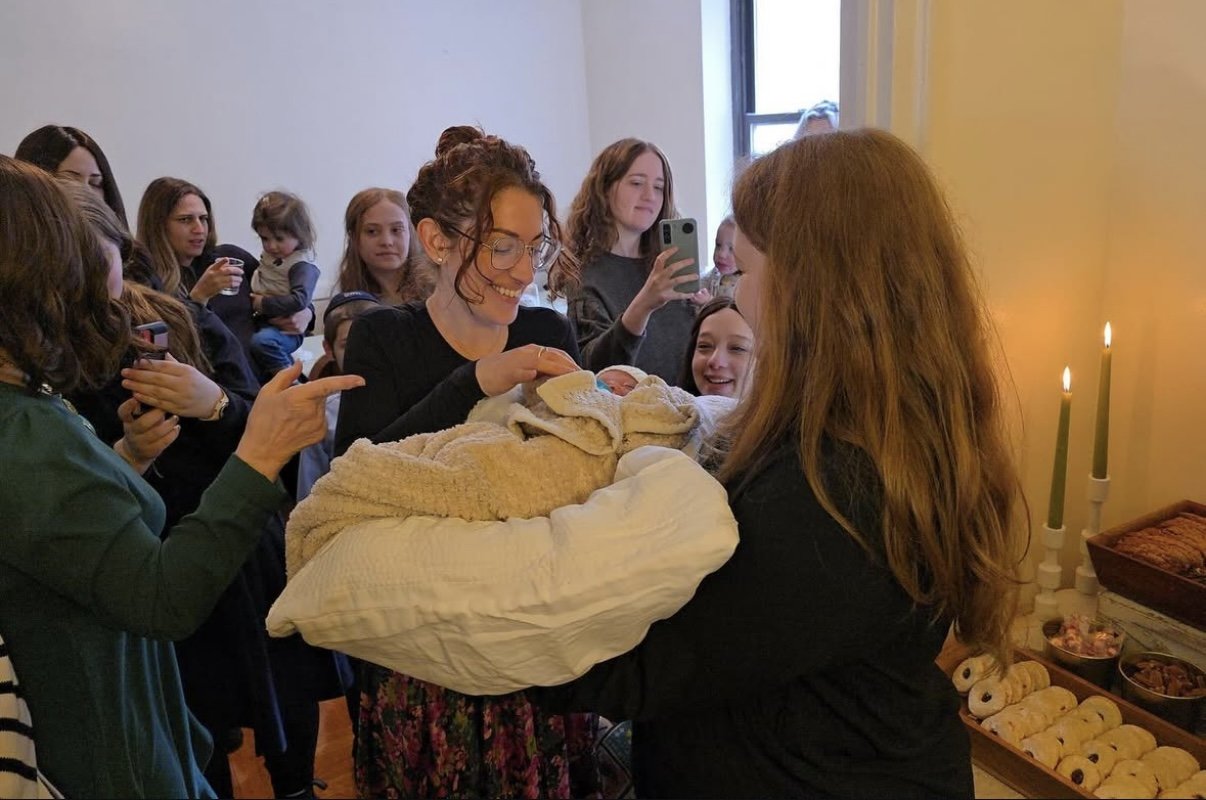
Chana and her sisters (Shayna Sapo kvelling with phone) looking on as South Bronx Jewesses bring Chana’s baby Chaim to his Bris.
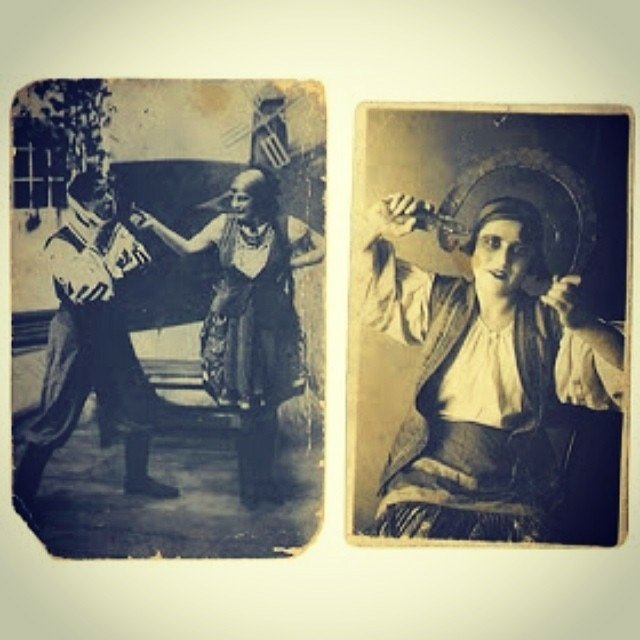
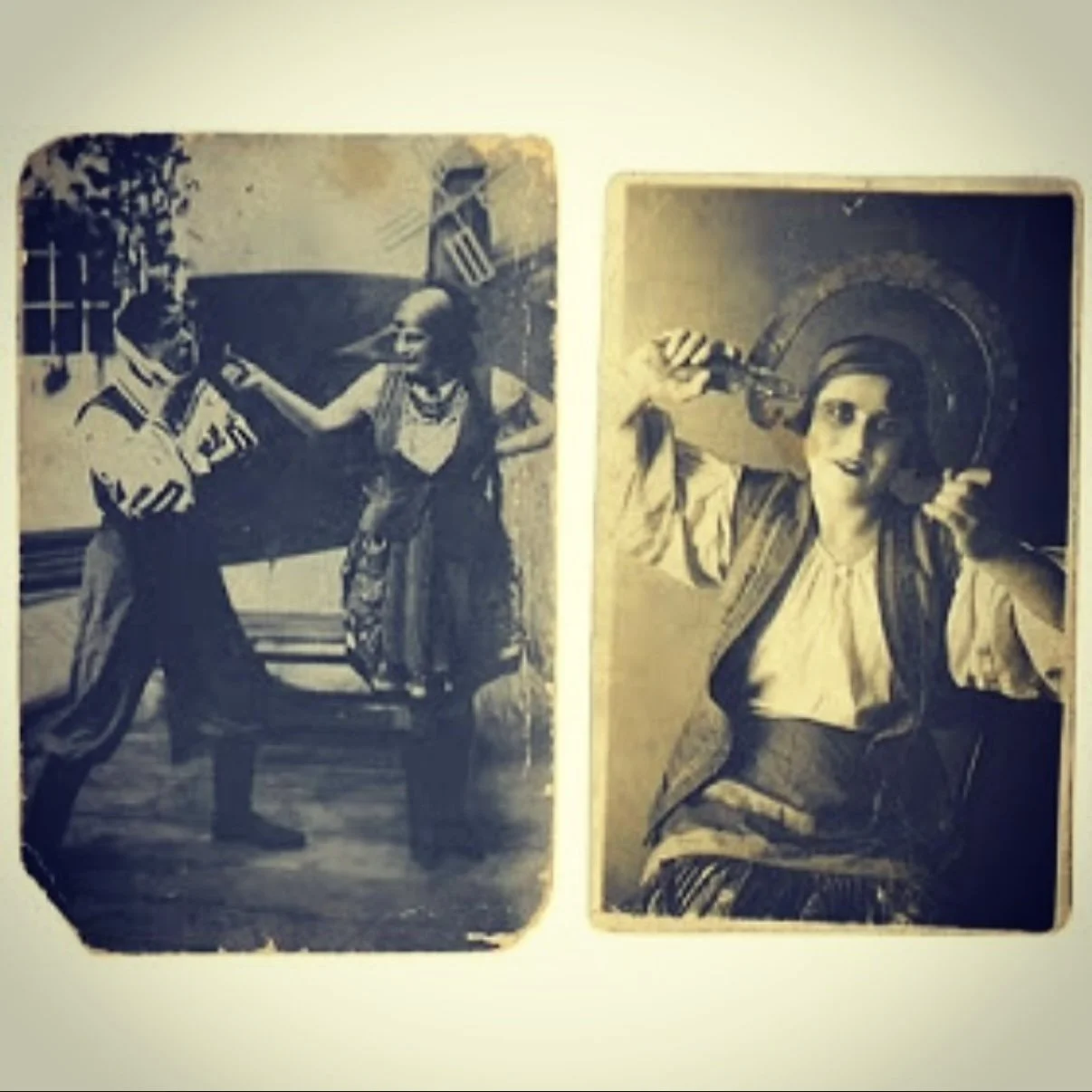
Baba Eva on stage as an actress in the traveling Yiddish theater troupe in Kharkiv, Ukraine.
weekly torah: Parsha shemini
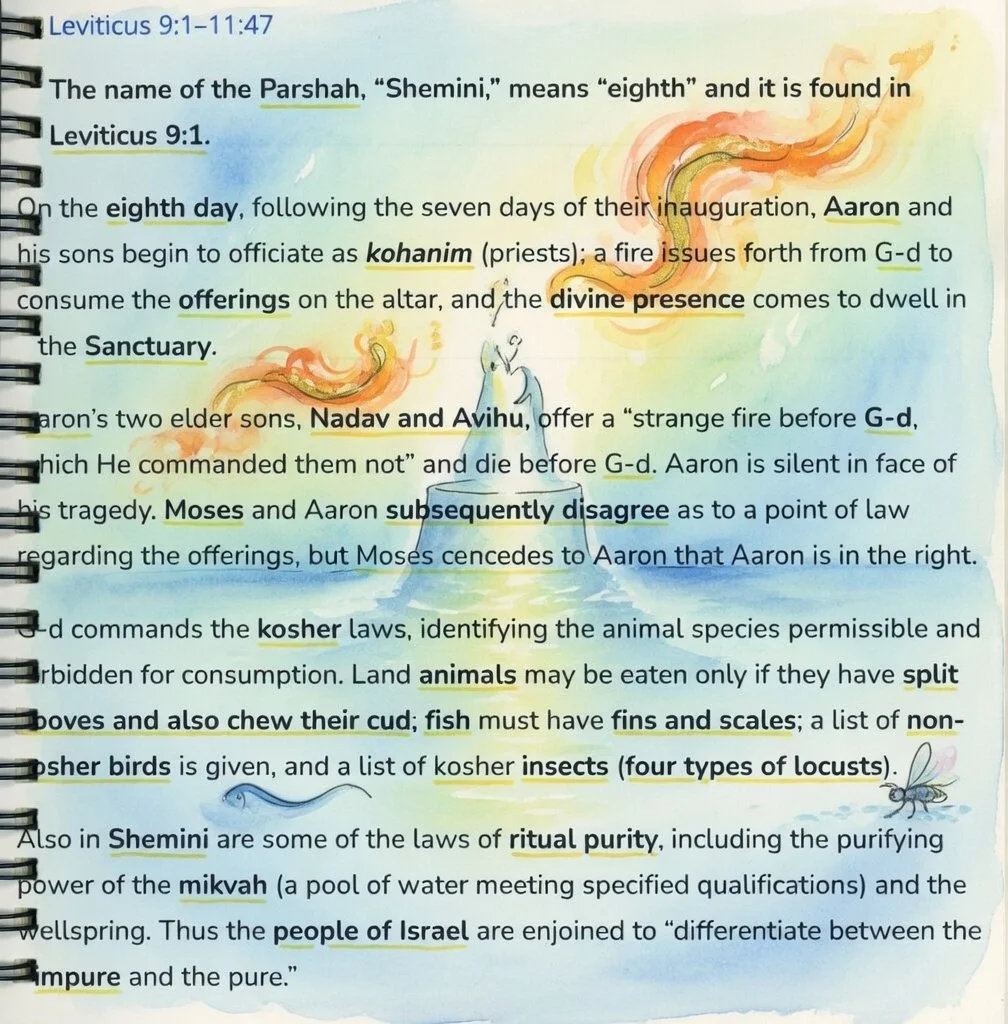
As Passover closed at sunset last night, the crunchy mitzvah of matzah went with it. I felt rededicated to aligning with Hashem’s laws, as a way to embody my highest potential—as his servant and as an example of his greatness. Being more mindful about what we eat and how we treat one another lets us stay off autopilot, and in our best relations with each other. As Chana described last lesson, some behaviors can be elevated, while others are just to avoid, period. I’m glad I am learning this now as an adult, but I am sad that I didn’t learn it in my childhood. I wish I had continued in Jewish day school after preschool. But, I’m looking forward to one day raising a little rabbi (or whatever they want to become) who has an education of Jewish values and our history with Hashem, so I can learn from their wisdom too.
Last week’s Torah portion reflections: Parsha Tzav
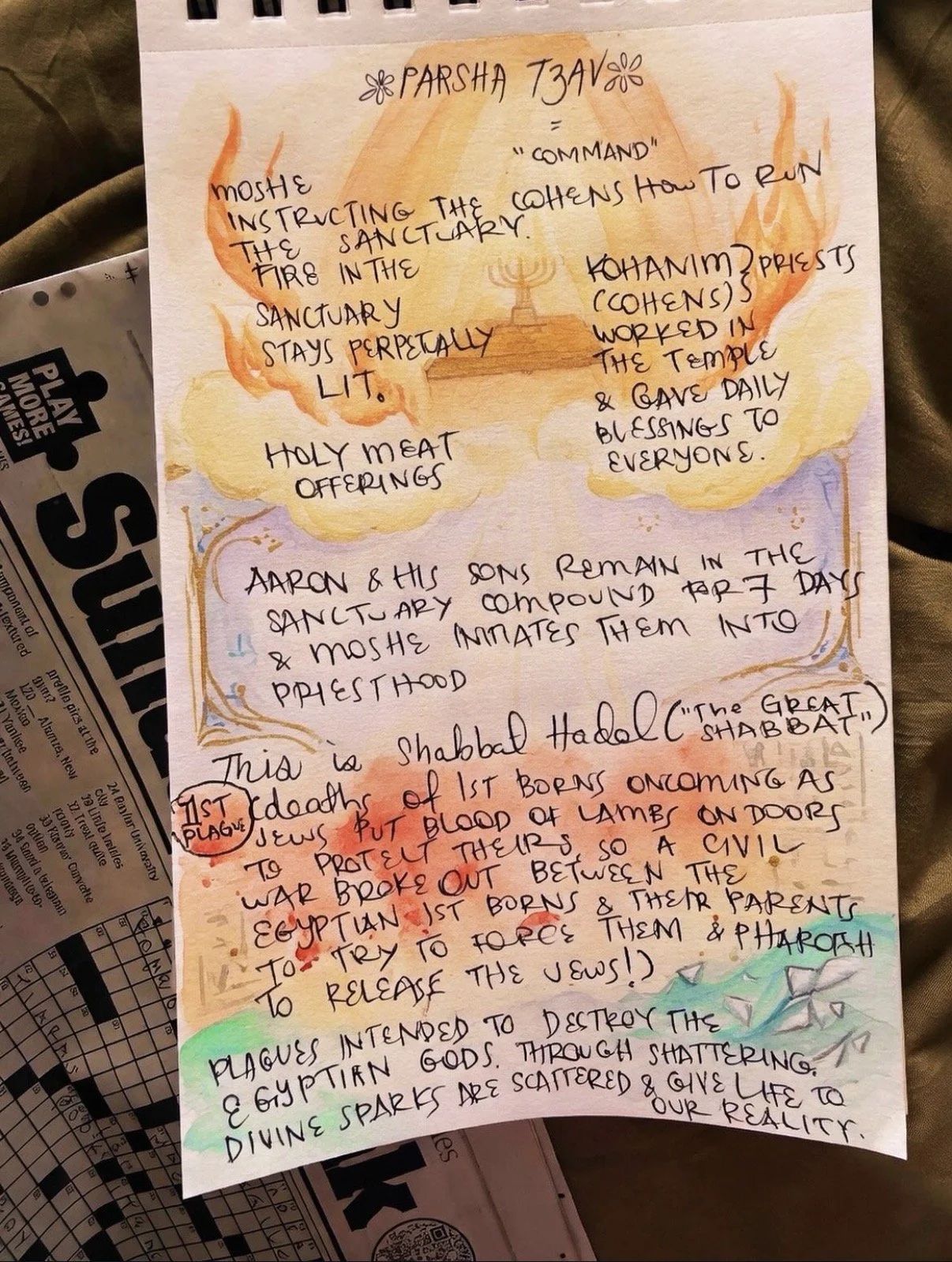
Last week’s Torah portion reflections…Parsha Tzav (“command”) which aligns with a very special Shabbat, Shabbat Hagadol which just passed. So many details in this parsha on how to set up the sanctuary, how to be a priest, and how to make offerings. On this Shabbat we commemorated when the first born Egyptians rose up against their parents to demand they release the Jews from slavery as word of oncoming plagues spread, if Hashem saw that Egyptians denied the Jews our freedom. I loved this idea Chana Mushka shared—the plagues brought a shattering of the status quo, and through shattering, divine sparks are freed from the darkness and scattered, allowing them to rejoin the divine energy in the world 🤍
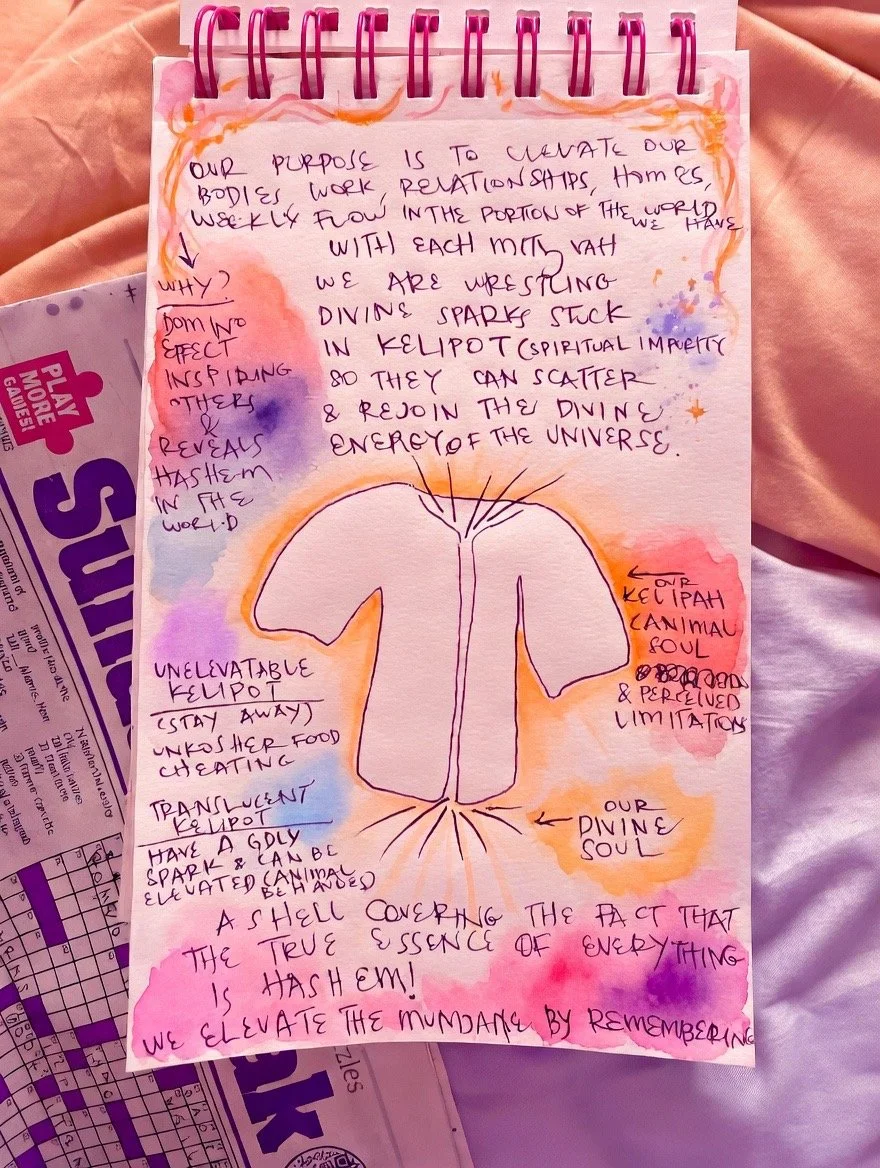
Diving deeper into some Tanya related to last week’s Torah portion, we visualized the relation between the divine soul and the animal soul inside each of us. Both are important—like a candle’s flame can only reach high (the reaching for the divine) while attached to a healthy wick (the animal body). Our purpose as humans is to elevate the everyday mundane—our bodies, our work, relationships, homes, habits, weekly flow—in the small portion of the world that is ours, which will have ripple effects globally. We elevate the mundane by remembering that within us is a Gdly spark, and it is up to us if we will infuse our actions with it every day ✨
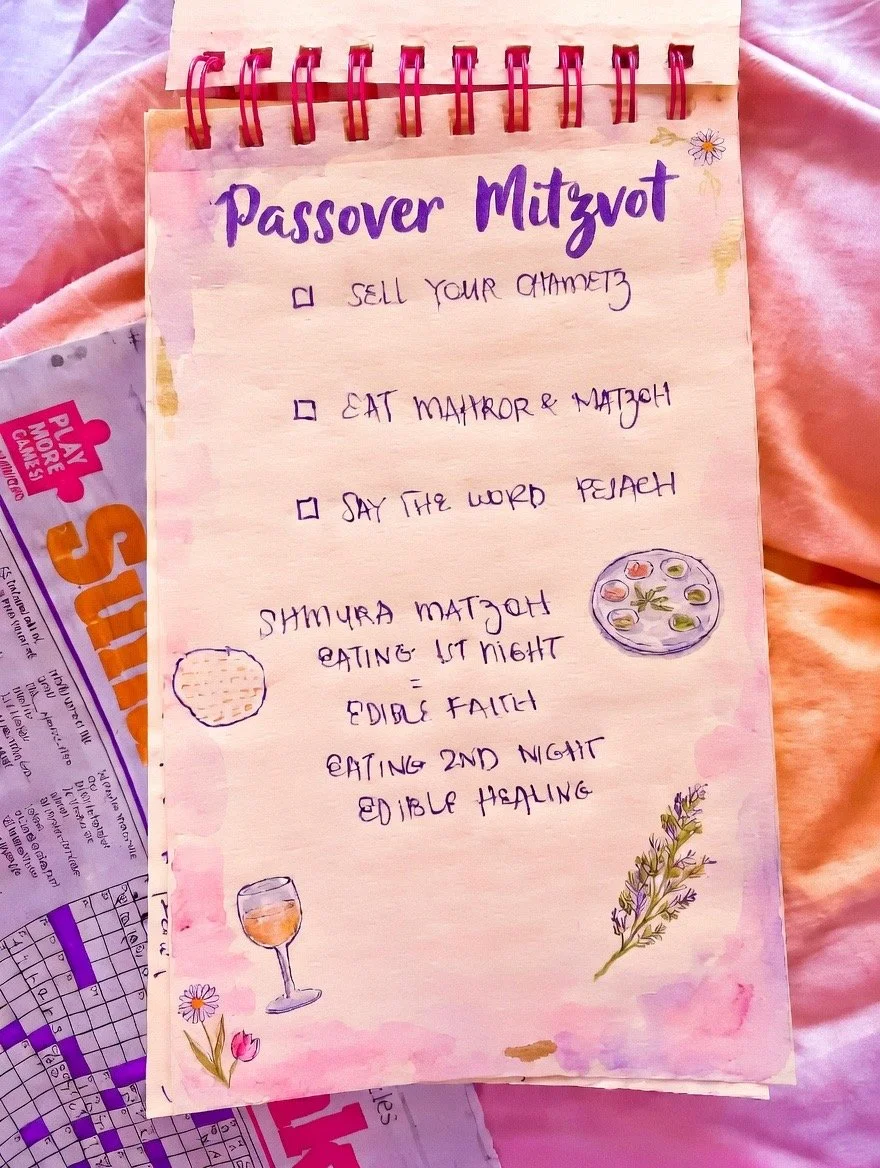
Three mitzvot of Passover~ shmura matzoh (“guarded”) is round to signify 1 side, as in one Hashem. It is made with love and prayers, guarded from any agents that could cause rising, from when the grains are still in the field. Shmurah matzoh at the first Seder is edible faith, while during the second Seder it’s edible healing. May this Passover bring us together in remembrance, faith, and family love 🫶
This week’s Torah Portion Vayikira visual reflections
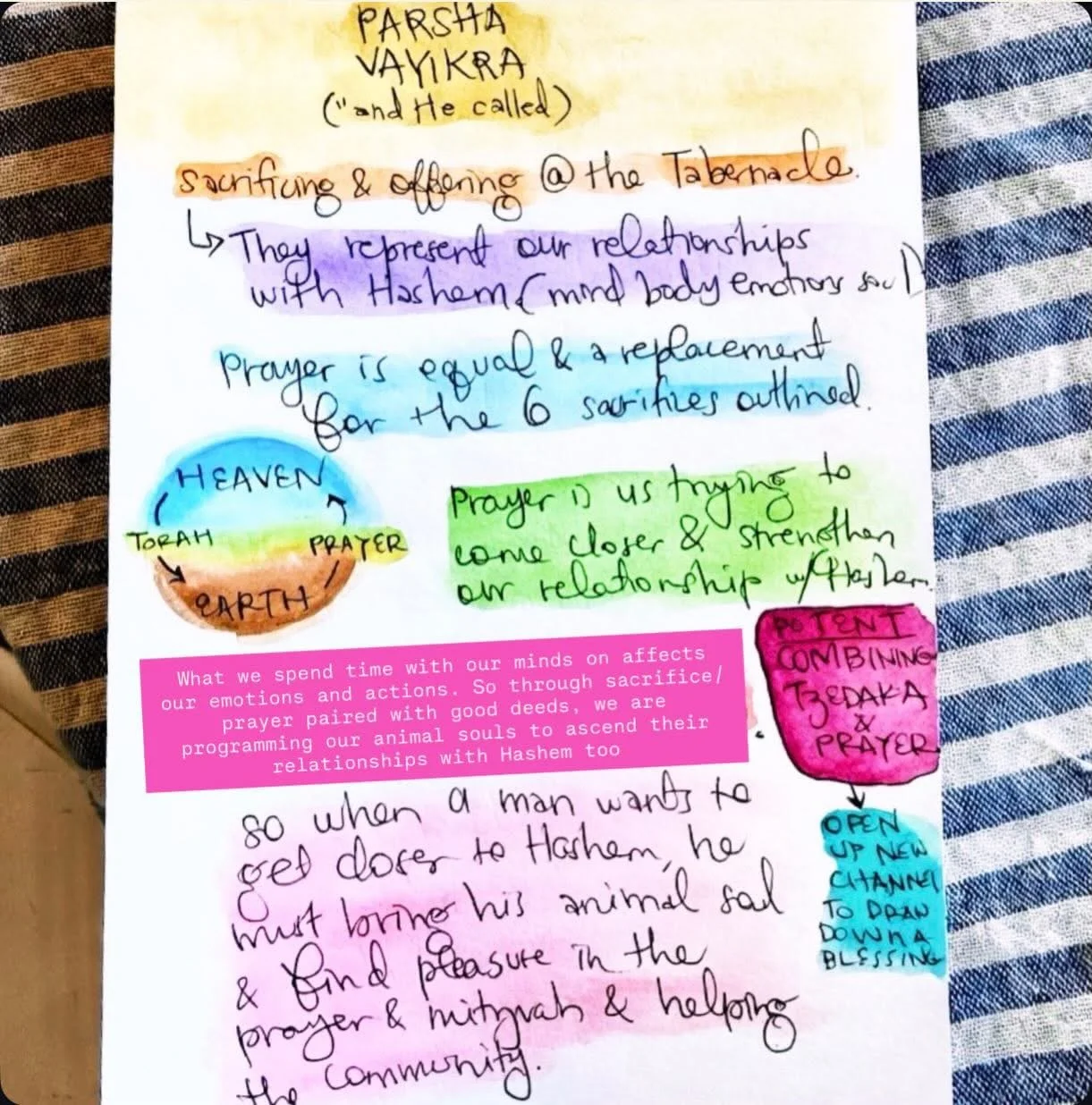
…prayers are the modern day version of the sacrifices outlined back in the day. And when you pair prayer with good deeds it is very potent and opens up a new channel to draw down blessings and also strengthen your personal relationship with Hashem on not just a spiritual level but also on the level of your animal soul 🦁
#BaruchHashem #Parsha #JewishArt #JewishCreatives #TorahInspired
Parsha Vayakhel-Pekudei: Visual Reflections on Weekly Torah Portions, continued
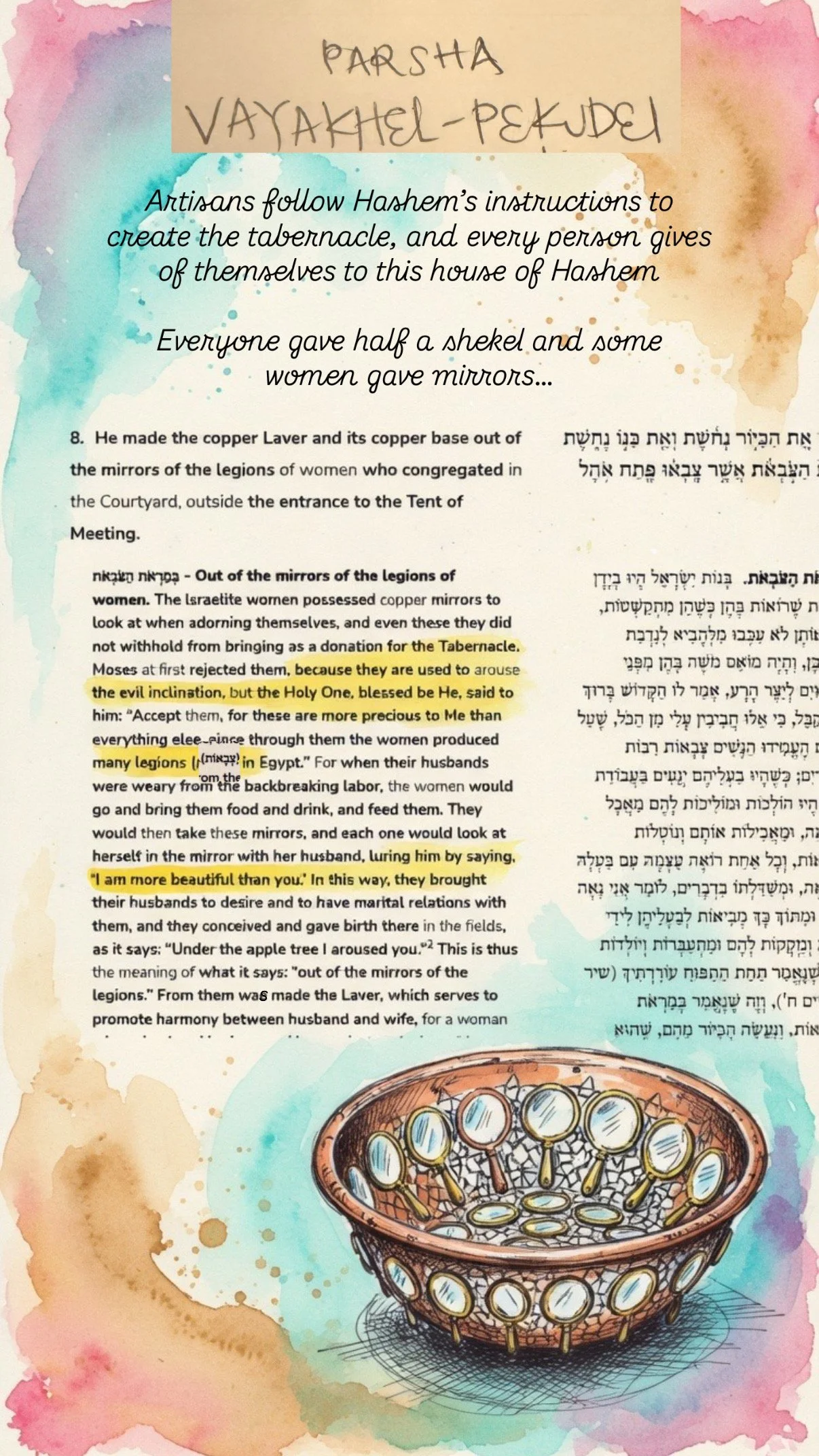
I loved learning this parsha, and felt seen as an artist and a woman by Hashem.
As an artist
Hashem tapped “wise-minded artisans” to fulfill his instructions for building a beautiful tabernacle. And, the sabbath faux-pas are all based on the various tasks artisans and community members did with their hands and bodies at the building of this first Sanctuary.
As I deepen my practice, I have found myself reasoning on Shabbat that art-making isn’t necessarily work, but more something done in collaboration with Hashem. But that’s the very point, that Hashem is resting. And furthermore, the work he cherished for the building of his home, and also for the rules set out for the Sabbath—that work is centrally art and artisanal. Therefore, I have a reckoning ahead of me in my Shabbat discipline given that art is work according to Hashem.
Update, an answer from Chana Mushka
To answer ur question—
Are you asking about why creating art etc isn’t meant to be done on Shabbat?
there are diff modes of service to Gd.
There’s service thru building (mishkan and weekday activities, working to make a living and make the work a better place) and service thru prayer and Torah study.
We are followng G-ds schedule with the creation of the world— 6 days a week we use our creative energy and create and build. On the seventh day, shabbos- we rest. We tap into resting energy and the “being” mode.
As a woman
Interesting is the story of the wash basin, the lavin, in the Sanctuary. While everyone was instructed to give half a shekel to the tabernacle project, women also gave of themselves their hand mirrors in which they would gaze at themselves to beautify. Moses thought this was a sort of baser item, rooted in vanity or idolatry or something corporal like that. However Hashem disagreed and conveyed he valued these donations most of all, because it was through that activity (beautification and self reflecting in the context of a marriage), resulted in more babies, more followers of Hashem. I love that Hashem sees our beauty as women in that light. I love the image described in the Torah of a woman looking at herself in her hand mirror with her husband next to her and telling him “I am more beautiful than you are,” which seduces him. Hashem really gets it!!
This context of valuing one’s gifts and strengths as something that serves the greater good is very important.
Context
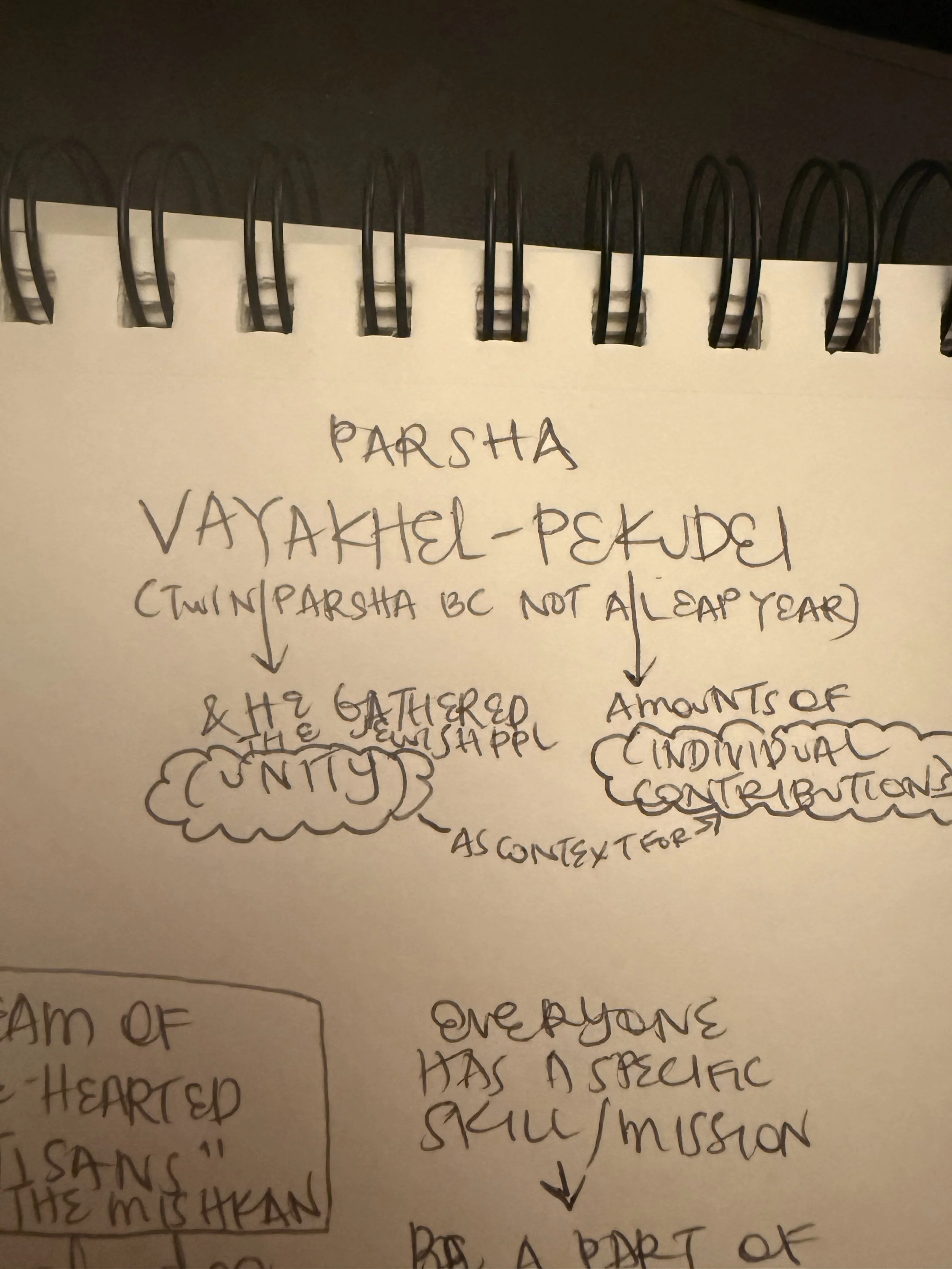
Chana Mushka Mishelovin, my long-distance Chabad rebbetsin, described the duality of this week’s parsha as individal contribution in the context of/ in service to unity/ the community.
The first portion translates to “and he gathered” and the second portion, which is combined with the first on non-leap years, translates to “amounts of,” and is about giving of oneself (half shekel, artisans’ creative output, other donations and products). What we have as far as skills strengths, talents, athletic of aesthetic gifts, etc, are naught without the context of what they can bring to the betterment of the world, especially those in your immediate world.
Parsha Ki Tisa: Visual Reflections on Weekly Torah Parsha Studies
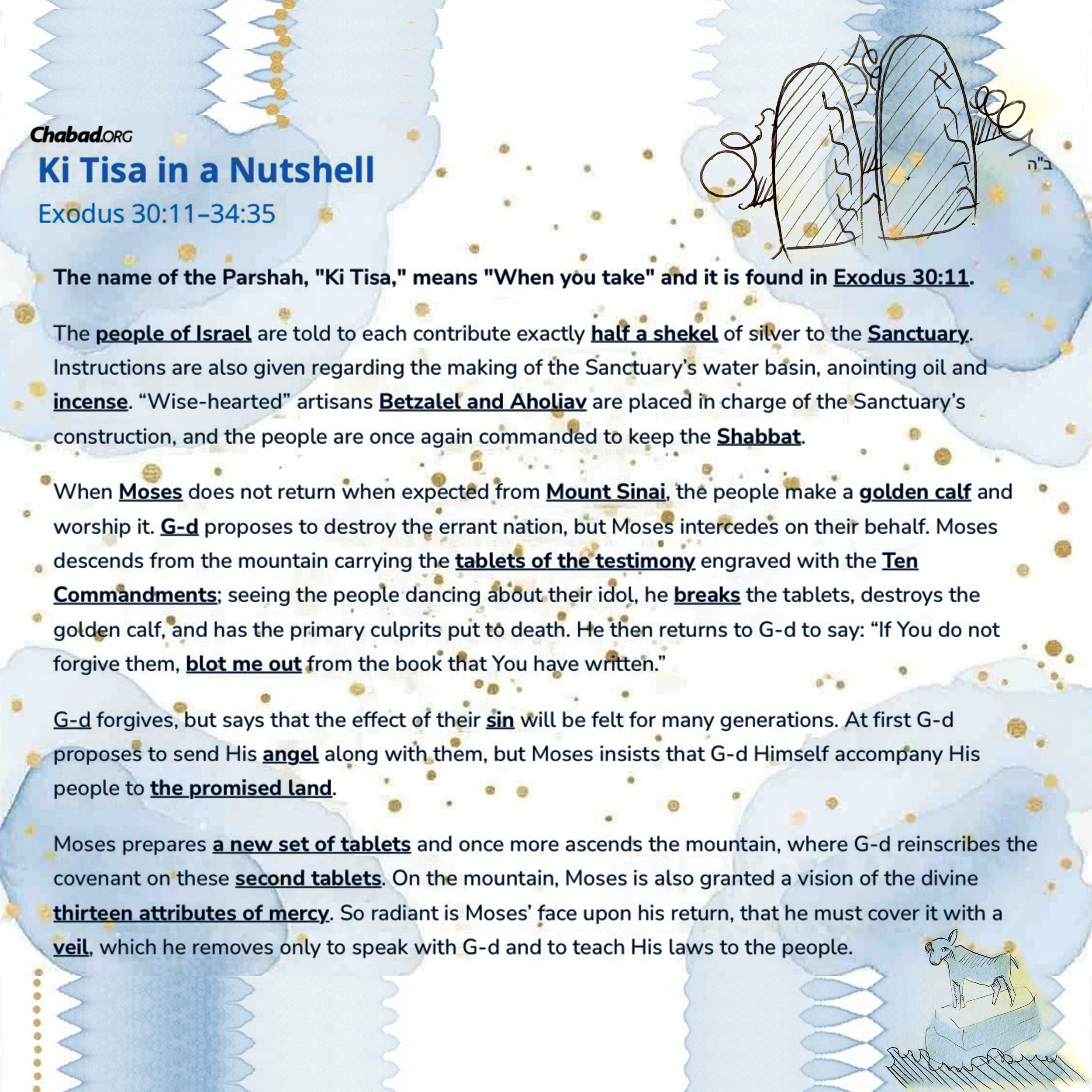
Weekly Torah portion visual reflection series, continued. Parsha Ki Tisa, featuring Chabad’s Nutshell summary, a weekly ritual of reviewing with my fav Chabadnik @chanamush from @chabadsouthbronx @shakerchabad. Chabad is an amazing movement that anticipates needs for introductory access points like this one for people like me (Jews who were refugees from Soviet-era Ukraine, deparated from our oral history and heritage due to Communist totalitarian regimes). Because of @chabadorg’s work, in the last few years I’ve been able to cultivate my relationship with Hashem, something I previously didn’t know I deserved to have. My family in Chicago and San Diego also connect with each other, our heritage, and with Hashem since we moved to America, because of opportunities developed by the local Chabads @chabadnorthbrook @chabadofpoway Even my great grandmother, the actress from traveling Yiddish theater company in Eastern Europe (slide 2), was able to prove her Jewish heritage for Nazi reparations because of the diligence of the local Chabad rabbi serving Skokie in the 90s. Thank you to all the Chabadniks, I cannot believe the boundless love with which you do your amazing inspiring work, and may you each of you be protected and placed exactly where you can do Hashem’s work most effectively forever and ever! Shabbat shalom y’all 💗💙✨💙💗
New Series: Visual Reflections on Weekly Torah Parsha Studies and other Jewish lessons
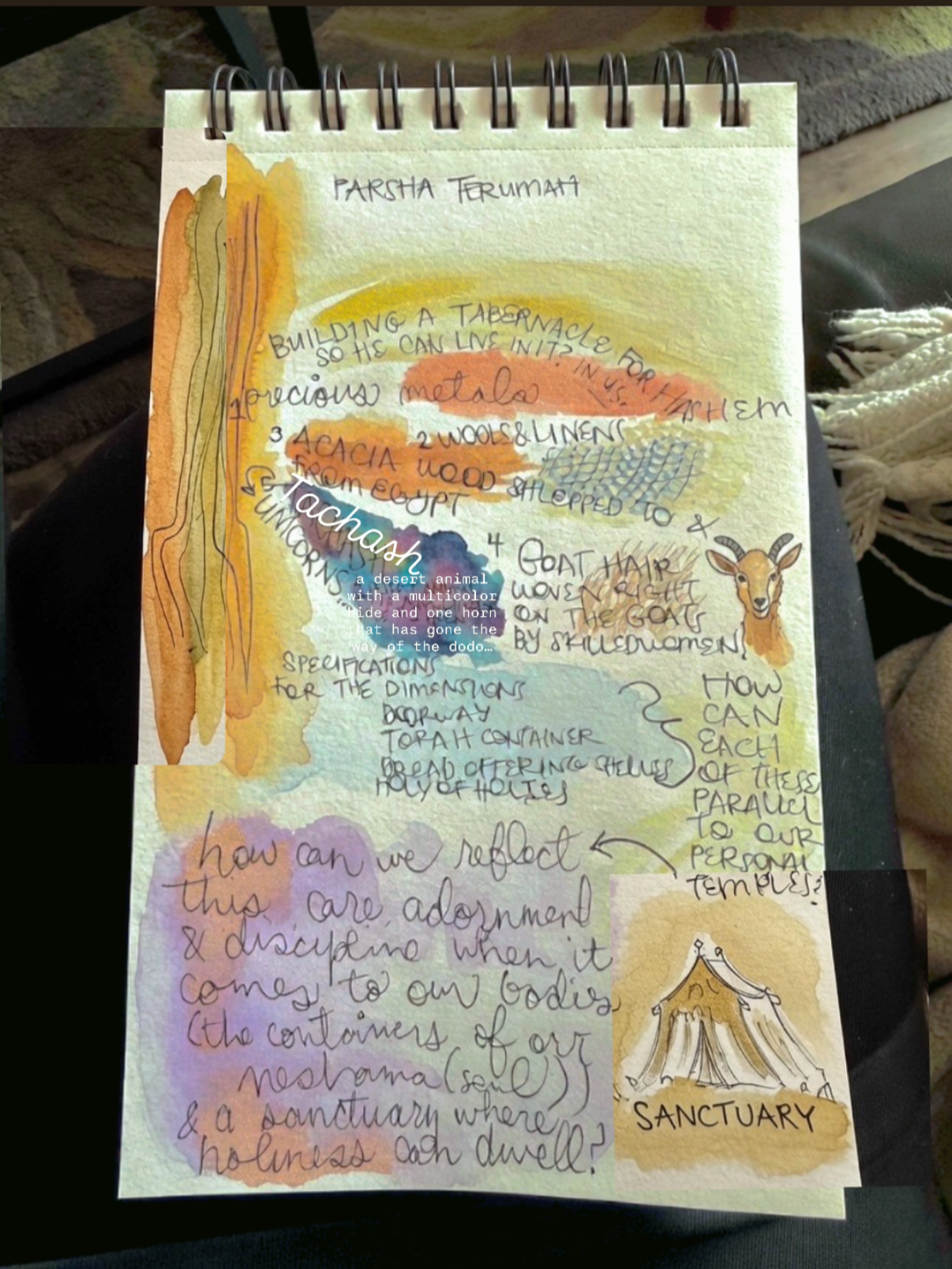
Parsha Terumah
Born the week of Chernobyl to Jews waiting to emigrate as refugees from the Soviet wasteland, Jewish education was not an overt priority, for survival’s sake. It was illegal to practice any religion in that dreary state, and being obviously Jewish detracted from social standing and professional and social opportunities. I was in an Uber to work at the Synagogue where I’m Marketing Director and Kevin, the driver, said “you’re going to work right?” And I said yeah, and he said, “don’t you want to know how I knew that?” And I realized he probably wasn’t seeing the “Work” label on the location I had set, and so I asked, “how?” And he said “because your name is margarita and you’re going to a synagogue and so I know you’re going to work because you’re not Jewish.” And I told him that I am Jewish, and my family named me Margarita to hide my Jewish identity in the Soviet Union. He was a retired cop who used to work synagogue detail around NYC, so he knew the deal. That every synagogue has armed guards. Protecting people studying and praying together.
Until 2023, I didn’t feel very welcome to immerse in Jewish studies and in turn what I’ve come to realize was my relationship with Hashem. After October 7th, everything flipped in my worldview in unexpected ways I can only see comparison in the Earth’s poles flipping. I had just bought a place in the South Bronx and hadn’t prioritized living in a place with a higher Jewish population than 2 (I exaggerate but not by much). That’s when I reached out to the closest rabbis I could find geographically, the Chabad at the end of the neighborhood park. Close enough to feel like home and even to walk to on Shabbat like a Jew in a legit Jewish community. Even more exciting was the relationship I cultivated with the women in the community. The rebbetzin (rabbi’s wife and Jewish educator) Chana Mushka understood that coming from Ukraine, I needed introductory access points to my Jewish learning. She met me where I was. And through weekly studies of the kabbalistic Tanya writings and later Torah, I began the, sometimes overwhelming, journey of cultivating a personal, one-on-one relationship with Hashem. Something I never felt worthy of having, let alone realizing it was an option. Chana Mushka opened my eyes to this relationship my heart already knew I had with Hashem, and it’s the best gift anyone will ever give me.
It took about 2 years to get to a place where I don’t cry every time I pray (only half the time now). I guess it’s the grasping of 3 things: The overwhelm of the greatness of this sacred relationship, the rightness of the lessons of the Tanya I learned, and the healing experience of feeling welcome and enough (and actually central as a Jew in the Ukrainian diaspora sharing heritage with the Chabad Rebbes through history).
I regret not starting this series during my Tanya studies in 5785 (2024-2025), but am glad I was jolted to begin as Chana Mushka and I and other women from the community began studying weekly Torah portions together (virtually as Chana’s family has since moved to the Midwest). The vision is that in sharing this rapid prototype-type multimedia, visual note taking on this blog and beyond, perhaps the resonating insights from Hashem’s words upon first study for me will also speak to the hearts of those who follow along. Thank you for connecting with me through my work, and Baruch Hashem for the opportunity to collaborate with Hashem on this journey. Stay tuned to this space for weekly installments from these lessons with my teachers and friends, as well as additional learnings around holidays and Jewish practice I’m picking up at my day job at the Synagogue.
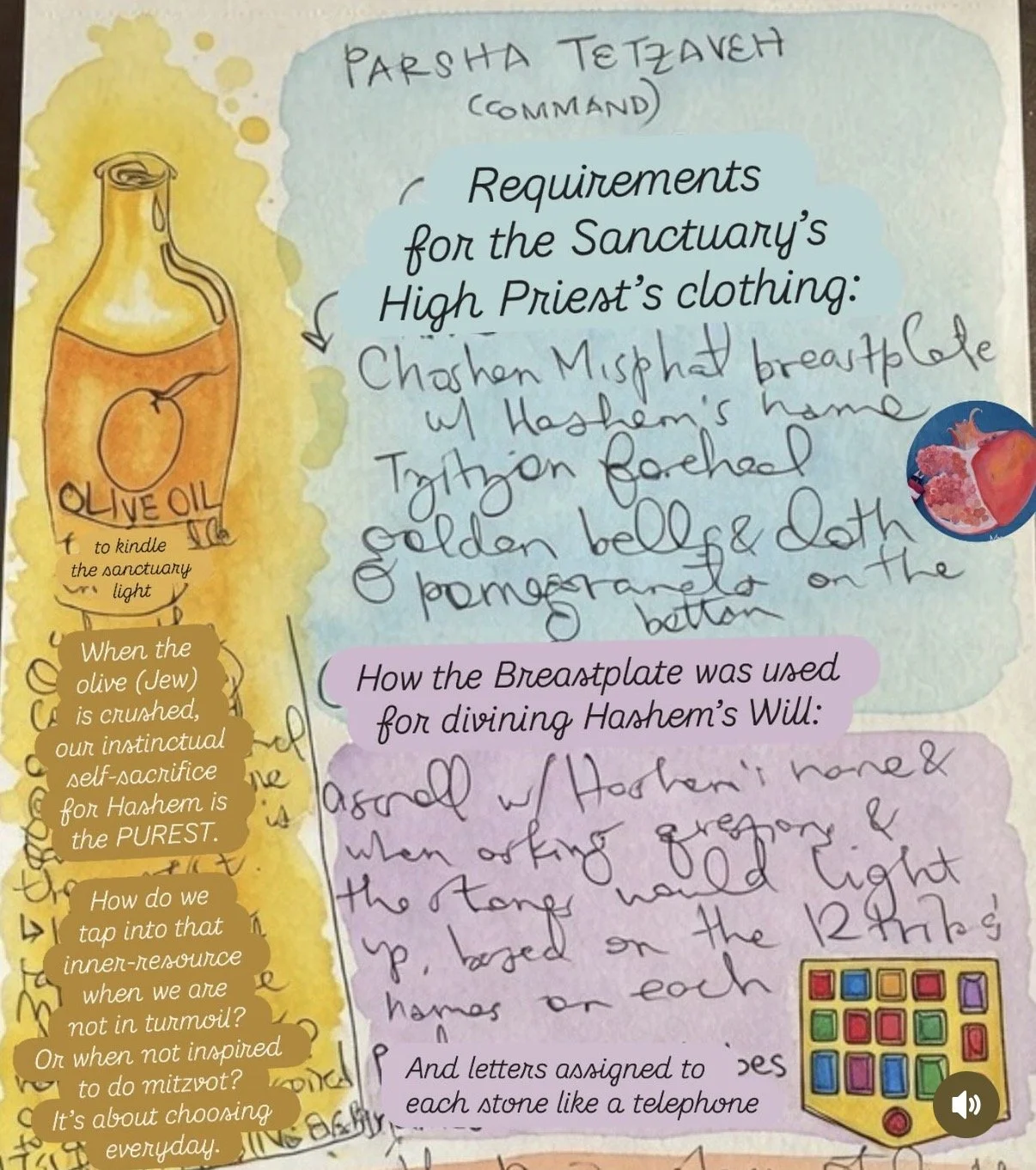
Parsha Tetzaveh
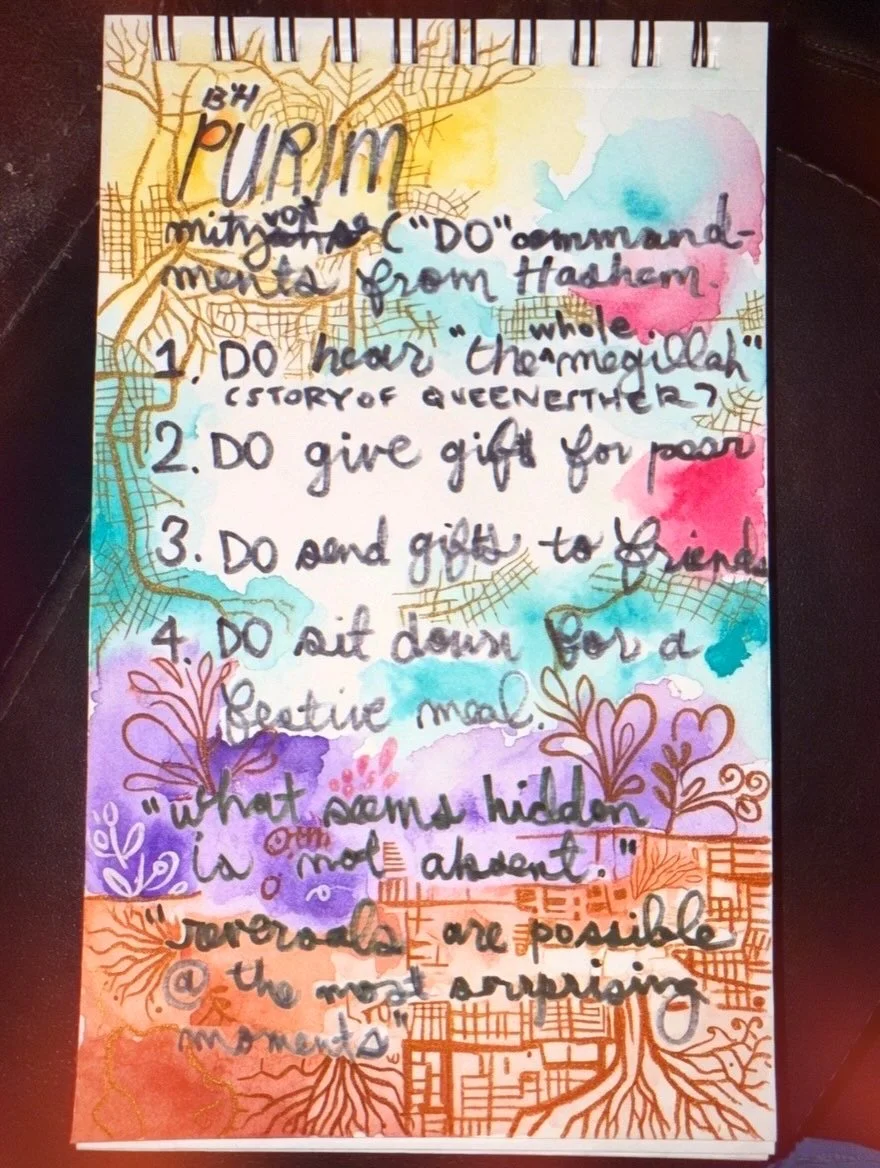
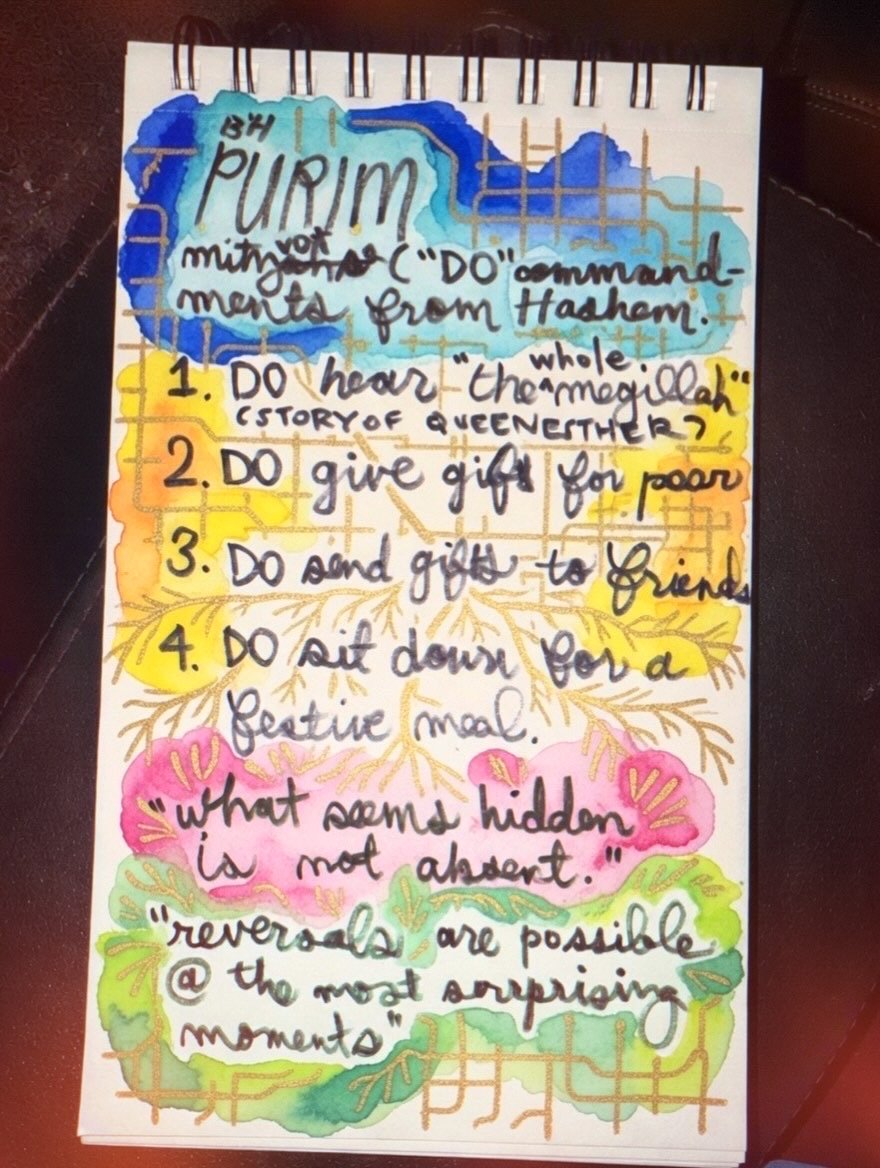
Purim Lessons