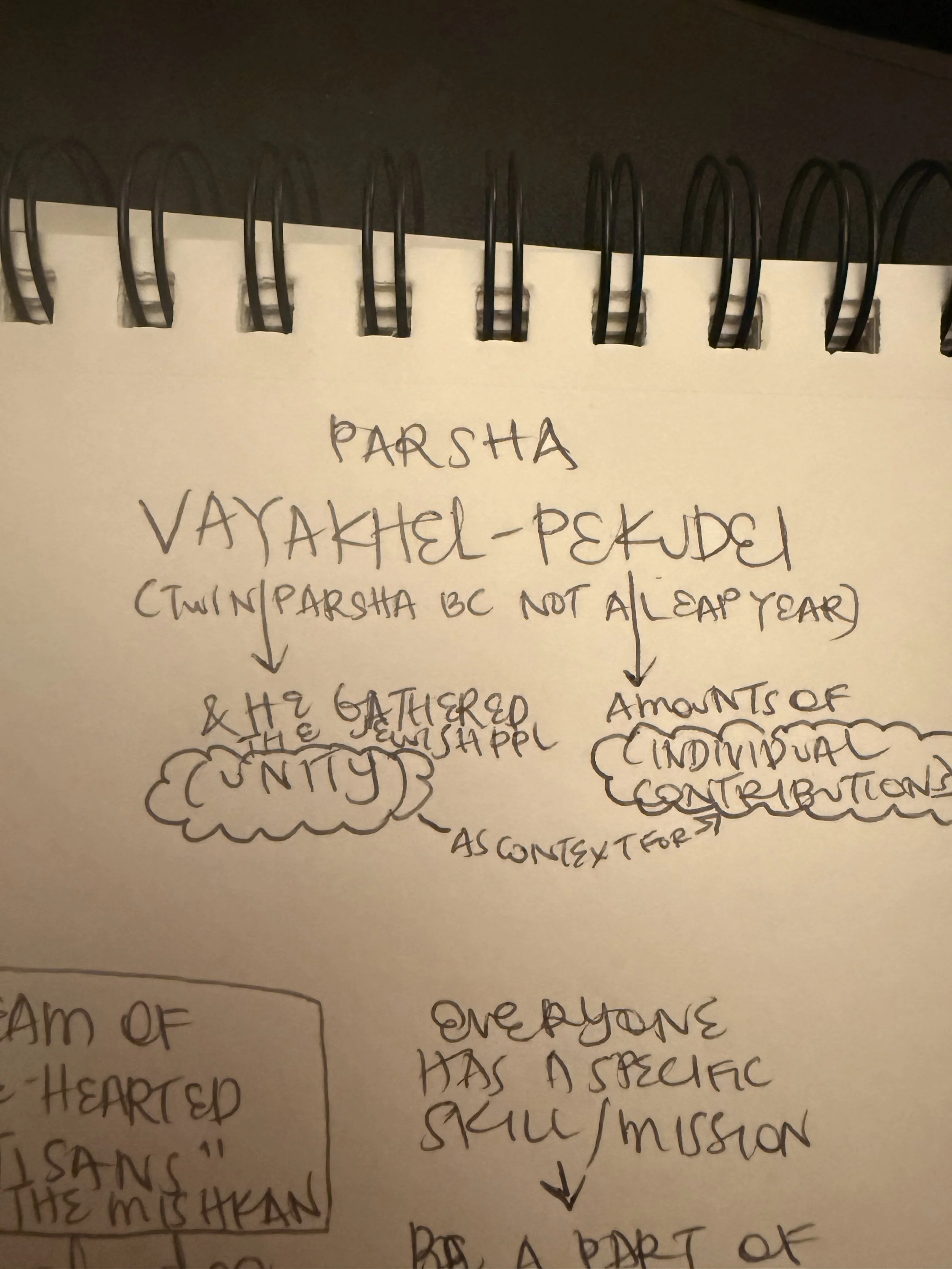
Parsha Vayakhel-Pekudei: Visual Reflections on Weekly Torah Portions, continued
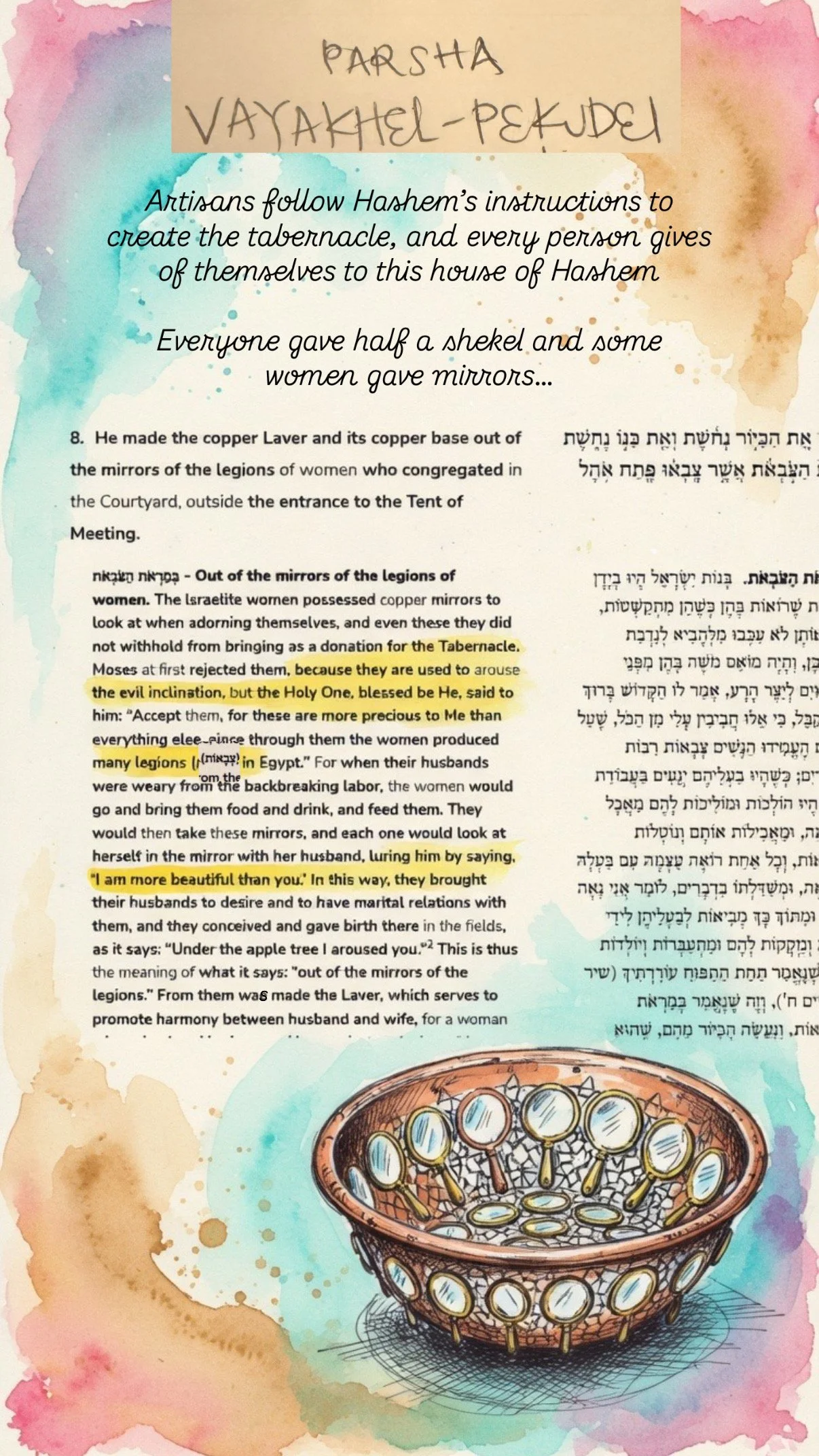
I loved learning this parsha, and felt seen as an artist and a woman by Hashem.
As an artist
Hashem tapped “wise-minded artisans” to fulfill his instructions for building a beautiful tabernacle. And, the sabbath faux-pas are all based on the various tasks artisans and community members did with their hands and bodies at the building of this first Sanctuary.
As I deepen my practice, I have found myself reasoning on Shabbat that art-making isn’t necessarily work, but more something done in collaboration with Hashem. But that’s the very point, that Hashem is resting. And furthermore, the work he cherished for the building of his home, and also for the rules set out for the Sabbath—that work is centrally art and artisanal. Therefore, I have a reckoning ahead of me in my Shabbat discipline given that art is work according to Hashem.
Update, an answer from Chana Mushka
To answer ur question—
Are you asking about why creating art etc isn’t meant to be done on Shabbat?
there are diff modes of service to Gd.
There’s service thru building (mishkan and weekday activities, working to make a living and make the work a better place) and service thru prayer and Torah study.
We are followng G-ds schedule with the creation of the world— 6 days a week we use our creative energy and create and build. On the seventh day, shabbos- we rest. We tap into resting energy and the “being” mode.
As a woman
Interesting is the story of the wash basin, the lavin, in the Sanctuary. While everyone was instructed to give half a shekel to the tabernacle project, women also gave of themselves their hand mirrors in which they would gaze at themselves to beautify. Moses thought this was a sort of baser item, rooted in vanity or idolatry or something corporal like that. However Hashem disagreed and conveyed he valued these donations most of all, because it was through that activity (beautification and self reflecting in the context of a marriage), resulted in more babies, more followers of Hashem. I love that Hashem sees our beauty as women in that light. I love the image described in the Torah of a woman looking at herself in her hand mirror with her husband next to her and telling him “I am more beautiful than you are,” which seduces him. Hashem really gets it!!
This context of valuing one’s gifts and strengths as something that serves the greater good is very important.
Context
Chana Mushka Mishelovin, my long-distance Chabad rebbetsin, described the duality of this week’s parsha as individal contribution in the context of/ in service to unity/ the community.
The first portion translates to “and he gathered” and the second portion, which is combined with the first on non-leap years, translates to “amounts of,” and is about giving of oneself (half shekel, artisans’ creative output, other donations and products). What we have as far as skills strengths, talents, athletic of aesthetic gifts, etc, are naught without the context of what they can bring to the betterment of the world, especially those in your immediate world.